How Many Environmental Planning Constraints Apply to Your NSW Property?
The Answer Will Shock You.
Most landholders, when asked how many environmental planning constraints they need to worry about before buying, selling, or developing a rural property in New South Wales, guess somewhere between five and ten. Bushfire. Flood. Zoning. Heritage. Maybe something about koalas.
The actual number is 134.
One hundred and thirty-four distinct NSW government spatial datasets — maintained across more than a dozen state and federal agencies — any single one of which can quietly determine whether you can clear a paddock, build a shed, subdivide a title, harvest water, graze stock, sell a biodiversity credit, or even legally enjoy the dwelling you already live in.
The number isn't rhetorical. It's the count of lot-level datasets that MapCheck indexes against every one of NSW's 3.34 million cadastral lots — every property, every constraint, pre-computed and cross-referenced. We know it's 134 because we had to build the database that holds them all. Nobody had done it before, because nobody had needed to look at the whole picture at once.
Until now.
This article walks through where those 134 layers come from, what they look like on a real property, why most due-diligence processes miss half of them, and what that means for anyone making decisions about NSW rural land.
Part 1: The Legislative Landscape Nobody Sees
NSW’s environmental planning system is among the most complex in the world. It rests on a stack of legislation, policy instruments, and spatial datasets that have accumulated over four decades.
At the top sits the Environmental Planning and Assessment Act 1979 — the foundational statute. Beneath it, two categories of Environmental Planning Instruments (EPIs) control land use:
- State Environmental Planning Policies (SEPPs) — since 1 March 2022, consolidated down to 11 SEPPs covering Biodiversity and Conservation, Resilience and Hazards, Transport and Infrastructure, Housing, Primary Production, Planning Systems, Industry and Employment, Resources and Energy, and three Precincts instruments for Greater Sydney. Each one generates its own spatial layers.
- Local Environmental Plans (LEPs) — every one of NSW’s 128 councils maintains an LEP built on the Standard Instrument template (EPI 2006-155a), which defines roughly 20 standard spatial overlays: Heritage, Terrestrial Biodiversity, Riparian Lands, Flood Planning, Acid Sulfate Soils, Drinking Water Catchments, Scenic Protection, Groundwater Vulnerability, Salinity, Mineral Resources, and more. Plus unlimited “Additional Local Provisions” that councils can add as they see fit.
That’s the planning layer. Below it sit four parallel statutes, each generating their own independent constraint datasets:
- Biodiversity Conservation Act 2016 — Biodiversity Values Map, Areas of Outstanding Biodiversity Value, BAM-assessed stewardship sites, SAII (serious and irreversible impact) areas, species-credit trigger zones
- Local Land Services Act 2013 — Native Vegetation Regulatory Map (NVR) with Category 1 (exempt), Category 2 (regulated), Category 3 (vulnerable), and Category 4 (sensitive) land
- Rural Fires Act 1997 — Bushfire Prone Land Map, with Categories 1, 2, and 3, plus vegetation buffer zones
- Water Management Act 2000 — controlled activity zones, riparian corridors, groundwater vulnerability, and water source areas
Then add the Mining Act 1992, Crown Land Management Act 2016, Heritage Act 1977, National Parks and Wildlife Act 1974, Aboriginal Land Rights Act 1983, Native Title Act 1993, and the federal Environment Protection and Biodiversity Conservation Act 1999 — each contributing their own spatial overlays to the pile.
The NSW government publishes all of this. The SEED portal (Sharing and Enabling Environmental Data) currently hosts 6,756 spatial datasets across the environment, biota, and planning themes. The NSW Planning Portal Spatial Viewer exposes around 20 layers to the public. Your council’s DA assessment process typically checks 40–60 “matters for consideration” under s4.15 of the EP&A Act.
But nobody — until MapCheck — had indexed all of them at the lot level across the entire state.
Part 2: What 134 Layers Actually Looks Like on a Property
Numbers are abstract. Maps aren’t. Here’s what happens when you pull up the constraint stack on real NSW properties.
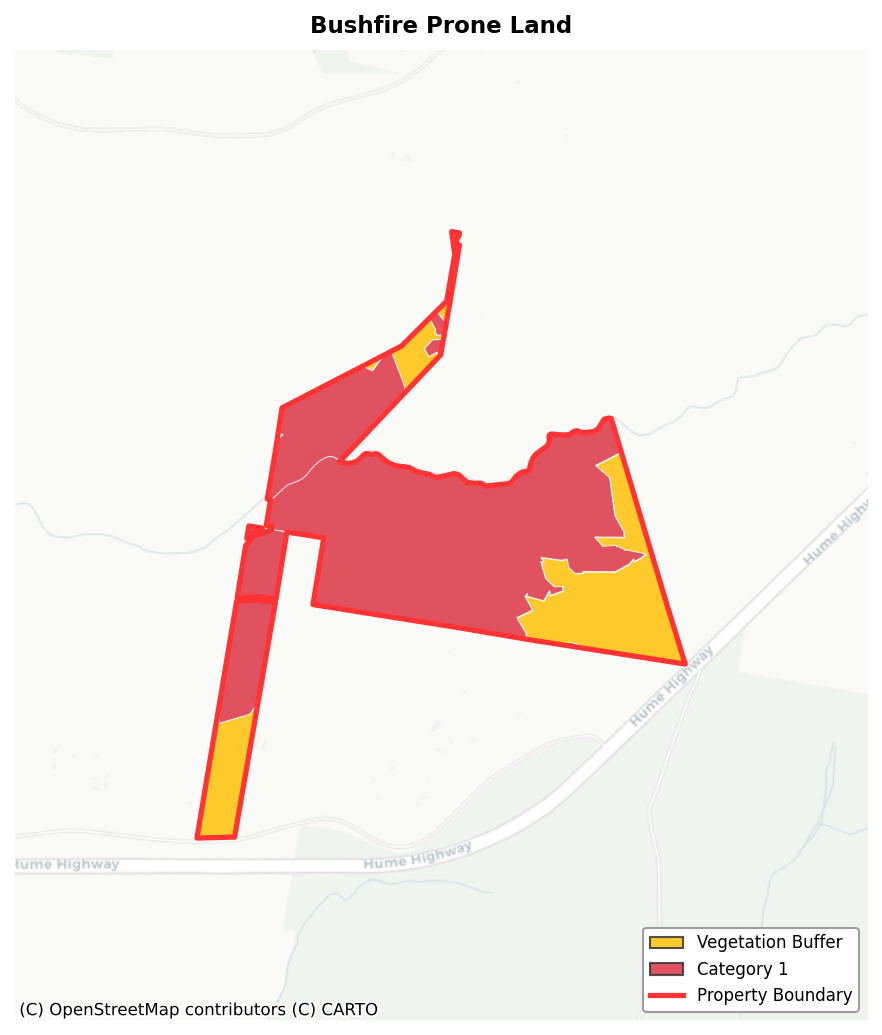
Bushfire Prone Land
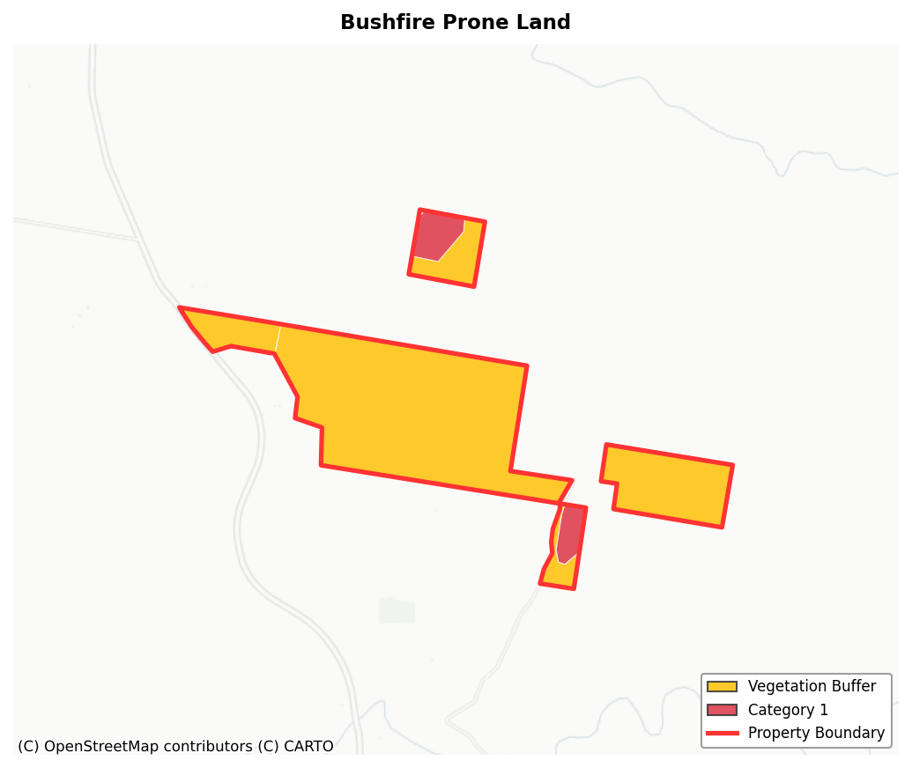
This is the one most people know about — but few understand the visual reality of what “bushfire prone” means on a 525-hectare rural lot in the Putty Valley, two hours northwest of Sydney.
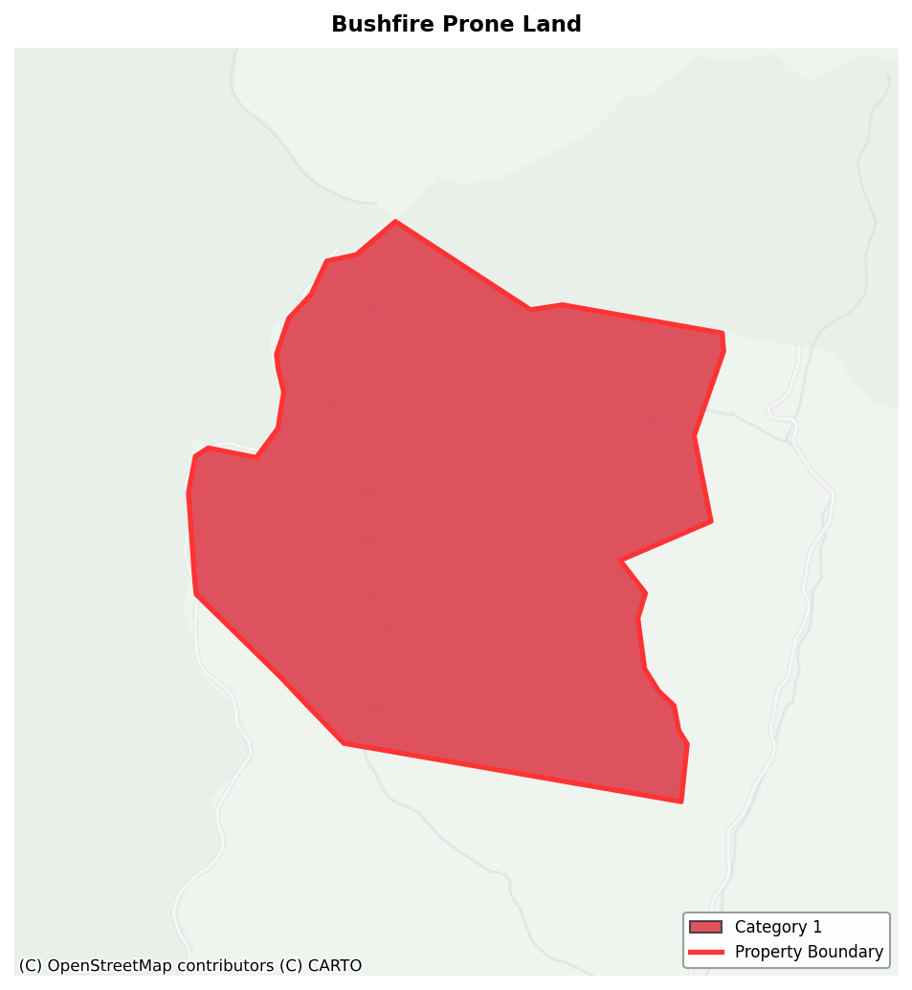
Under the Rural Fires Act, Category 1 means the land carries the highest assessed bushfire risk. The practical consequences cascade: BAL (Bushfire Attack Level) assessments for any habitable structure, mandatory defendable space, constraints on vegetation clearing within asset protection zones that may conflict with biodiversity requirements on the same land, and insurance premiums that reflect the mapped risk regardless of what the terrain actually looks like.
Native Vegetation — Clearing Categories
The same 525-hectare property tells a different story when you switch to the Native Vegetation Regulatory Map.
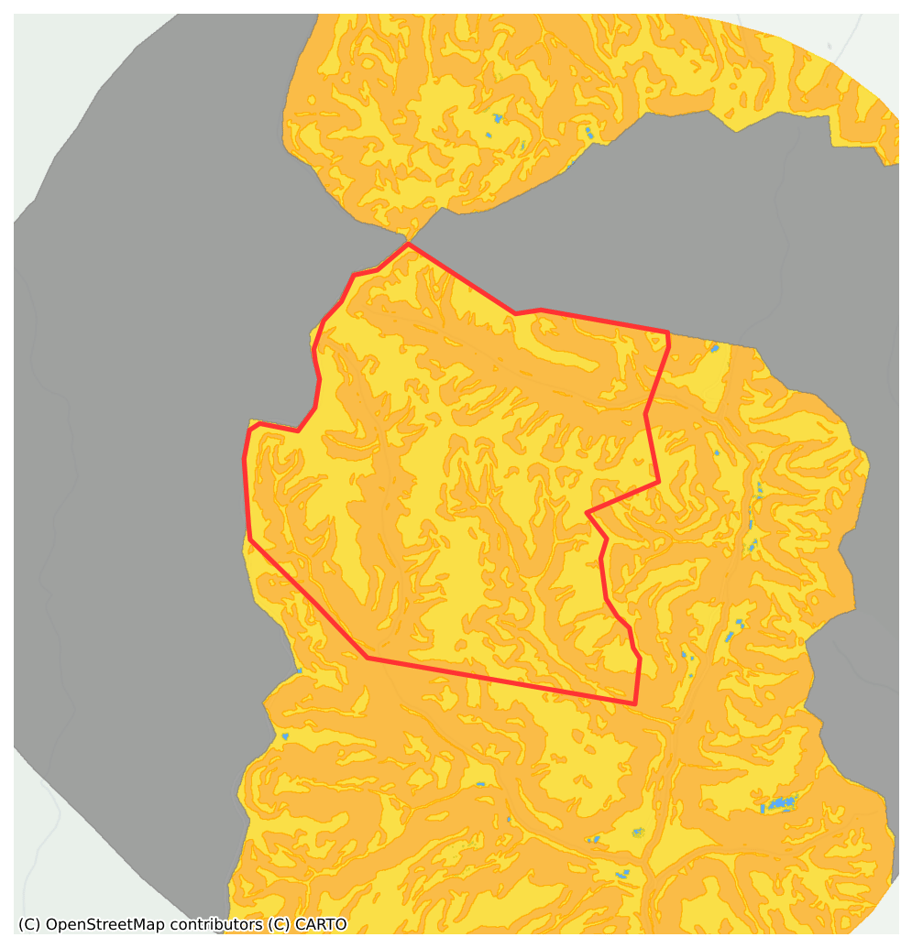
The NVR determines what you can clear without approval, what requires a set-aside, and what you cannot touch at all. Category 1 (exempt) land — former agricultural land that was cleared before 1990 — can generally be cleared without a biodiversity assessment. Category 2 (regulated) land requires approval and may require offsets. Most rural buyers assume their cleared paddocks are Category 1. Many aren’t.
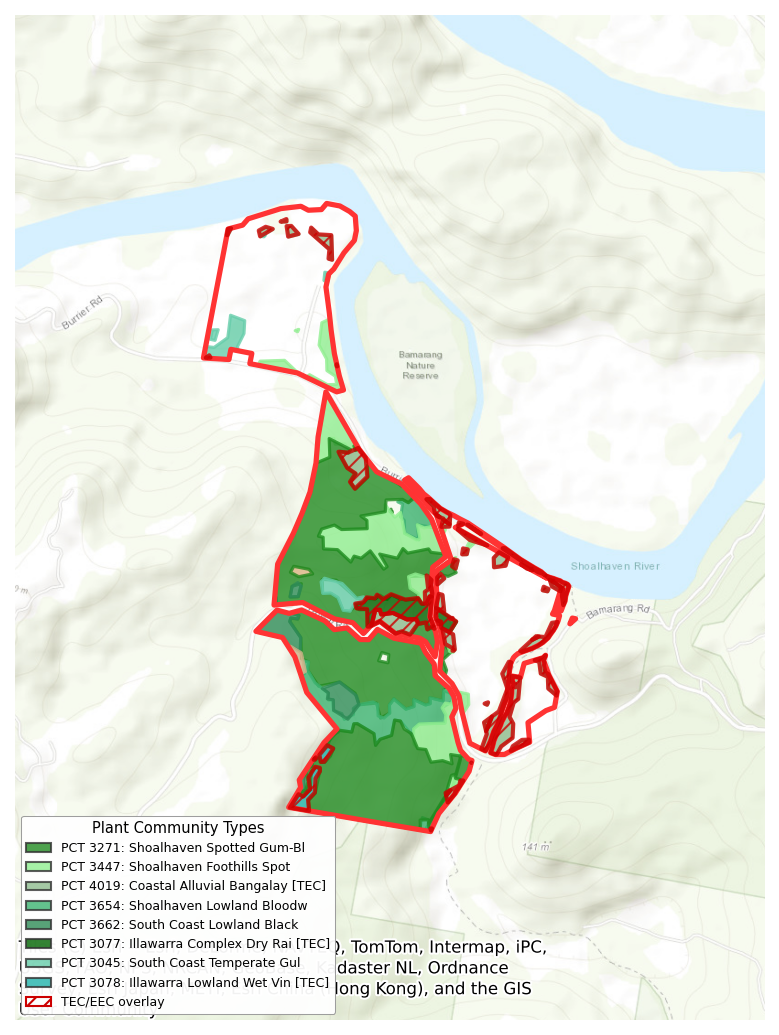
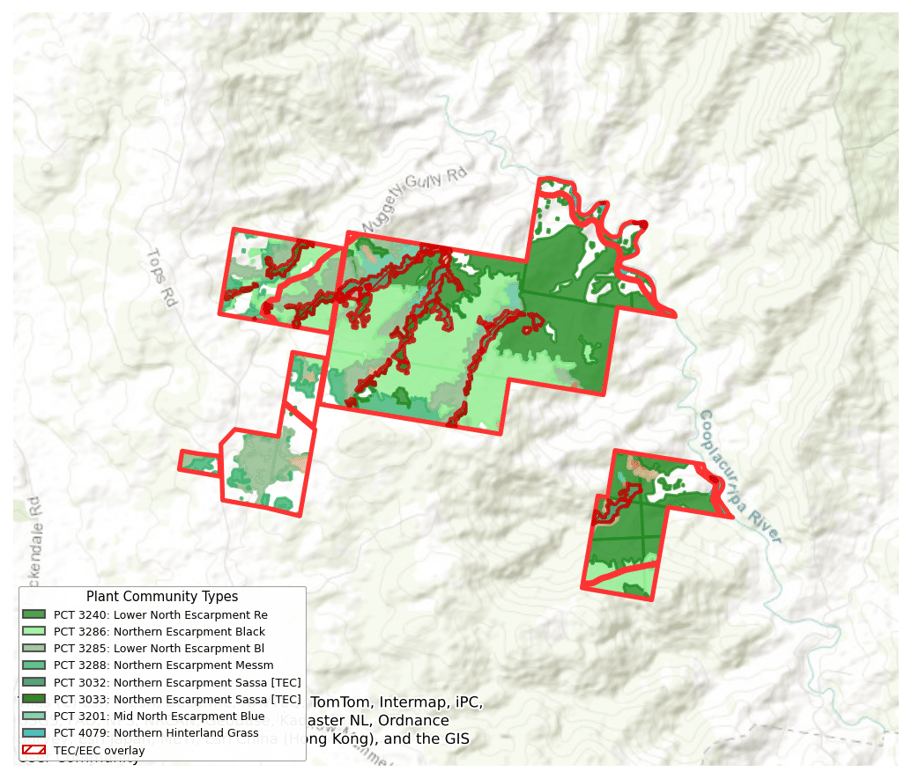
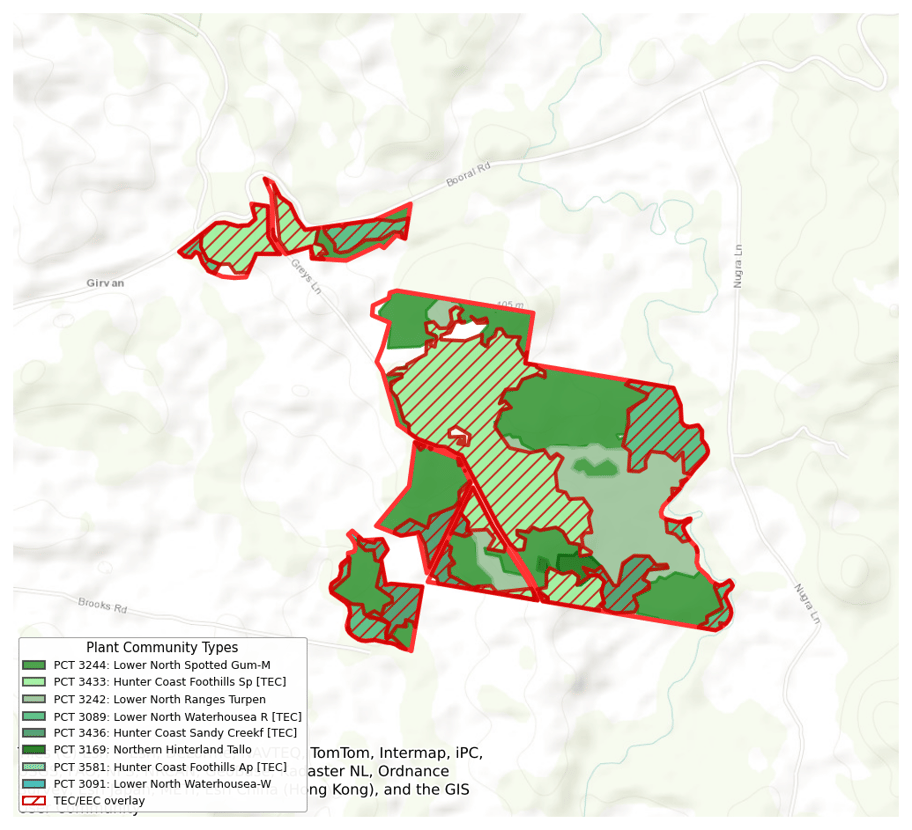
Plant Community Types (PCTs) — The Ecological Fingerprint
Vegetation isn’t just “trees” in NSW planning. It’s classified into Plant Community Types — specific ecological assemblages with different legal protections, biodiversity credit values, and management obligations.
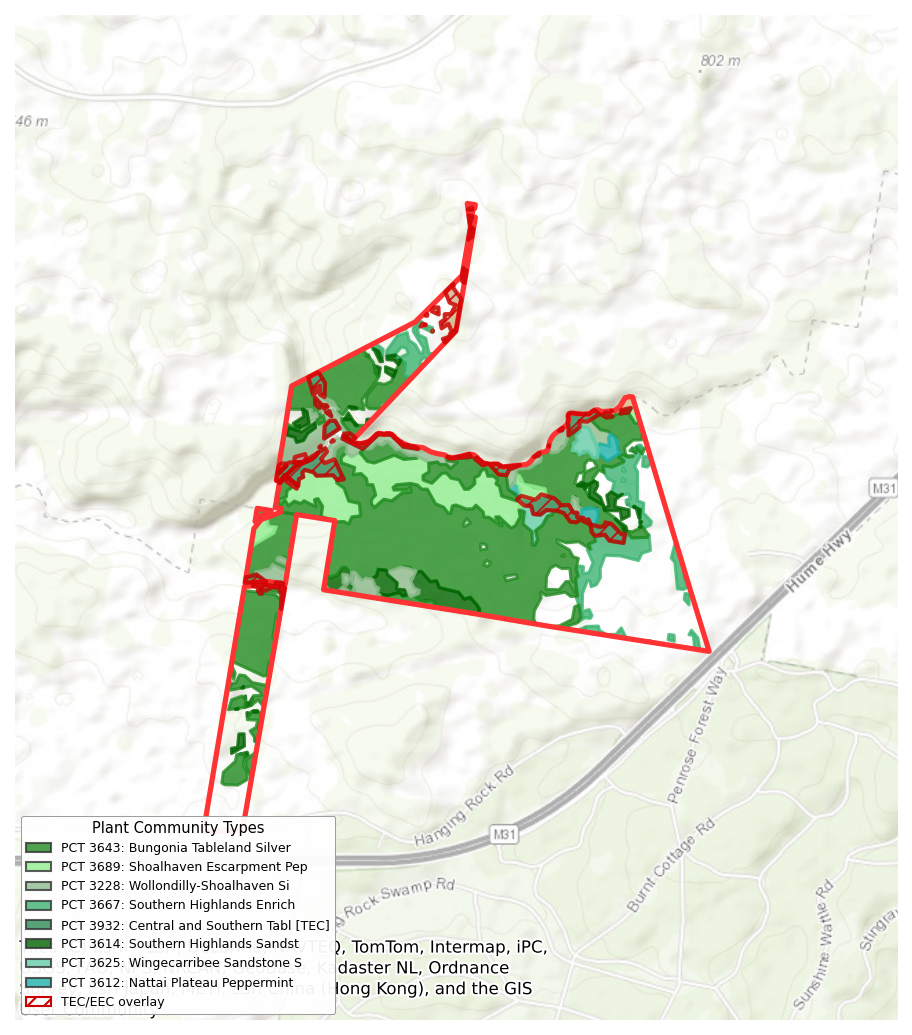
This is the layer that transforms a due-diligence exercise from “is there vegetation?” to “what kind, how much, what condition, and what is it legally classified as?” A property with three PCTs has a fundamentally different planning, credit, and management profile from a property with one — even if they’re the same size and have the same zoning.
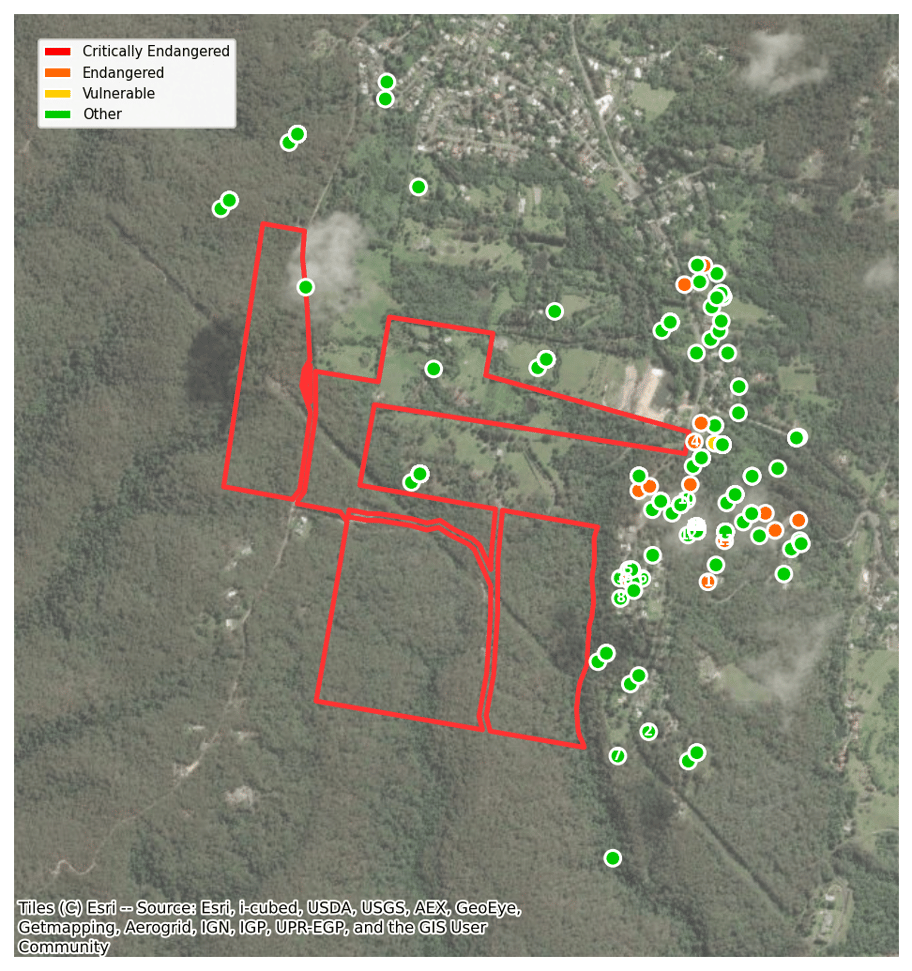
Threatened Species Sightings
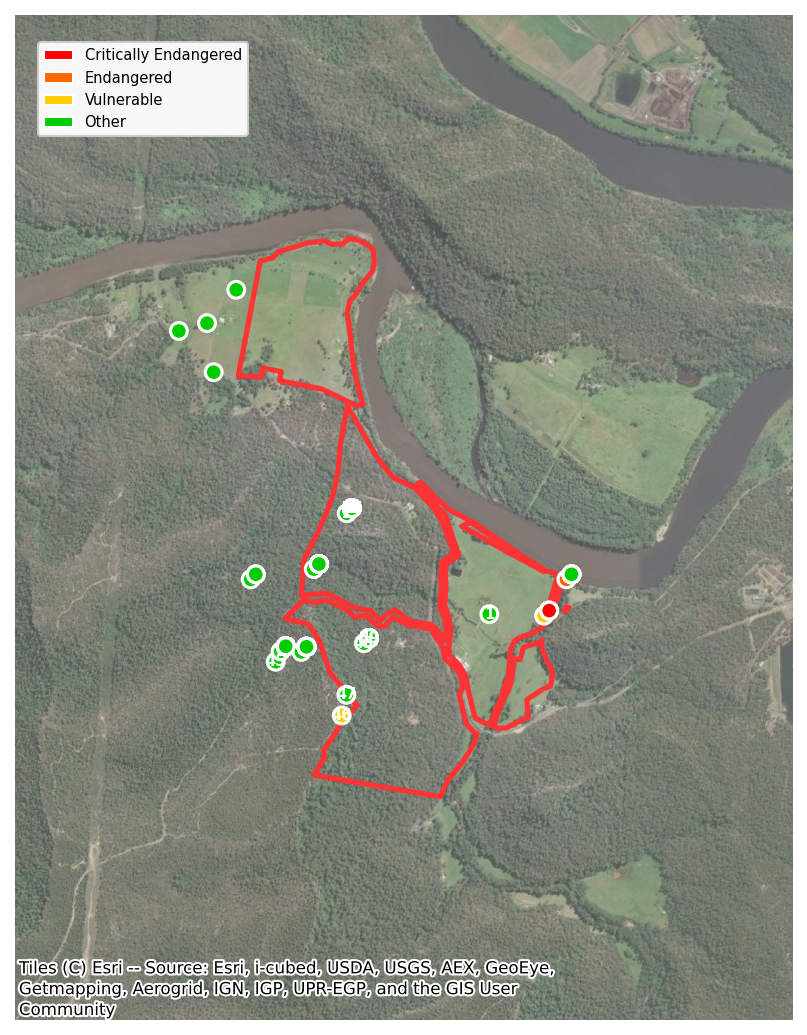
Below the vegetation sits the species layer. NSW BioNet maintains over 13 million species sightings — individual records of animals and plants observed at specific locations and dates. MapCheck indexes these at four buffer distances (directly on lot, 100m, 200m, 500m, 1km) to build a species-density profile for every lot in the state.
Zoning — More Complex Than You Think
Everyone knows about zoning. Few realise how many zones can coexist on a single rural holding.
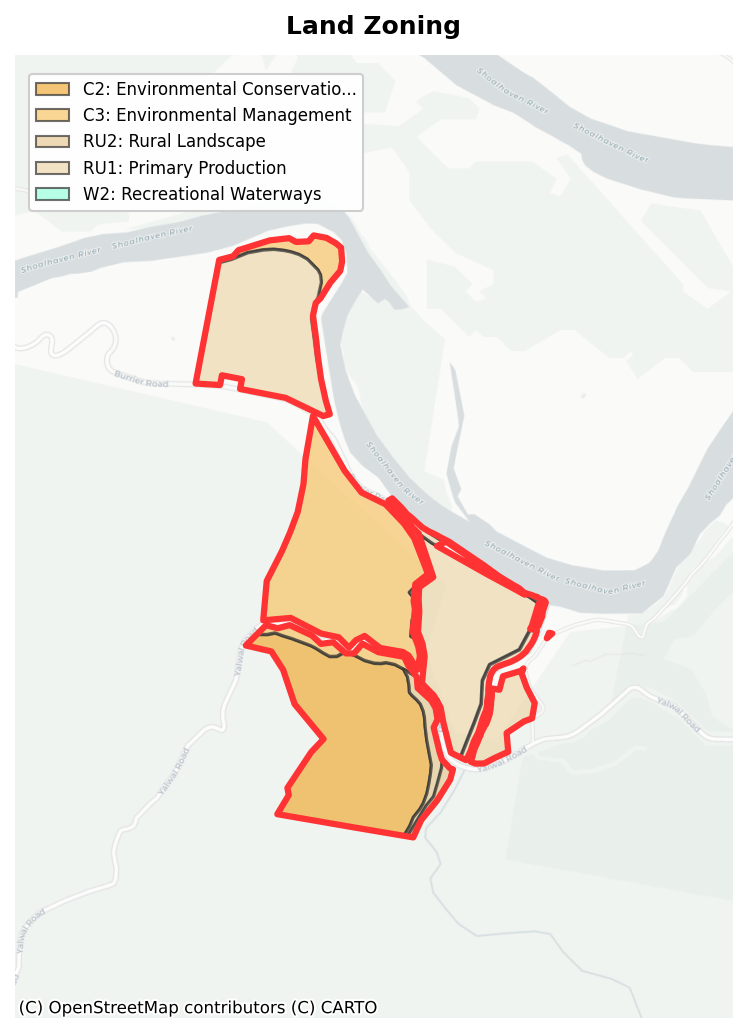
This is why a simple “what’s the zoning?” question — the one every buyer asks — is the wrong question. The right question is “how many zones does this lot straddle, and what does each permit?”
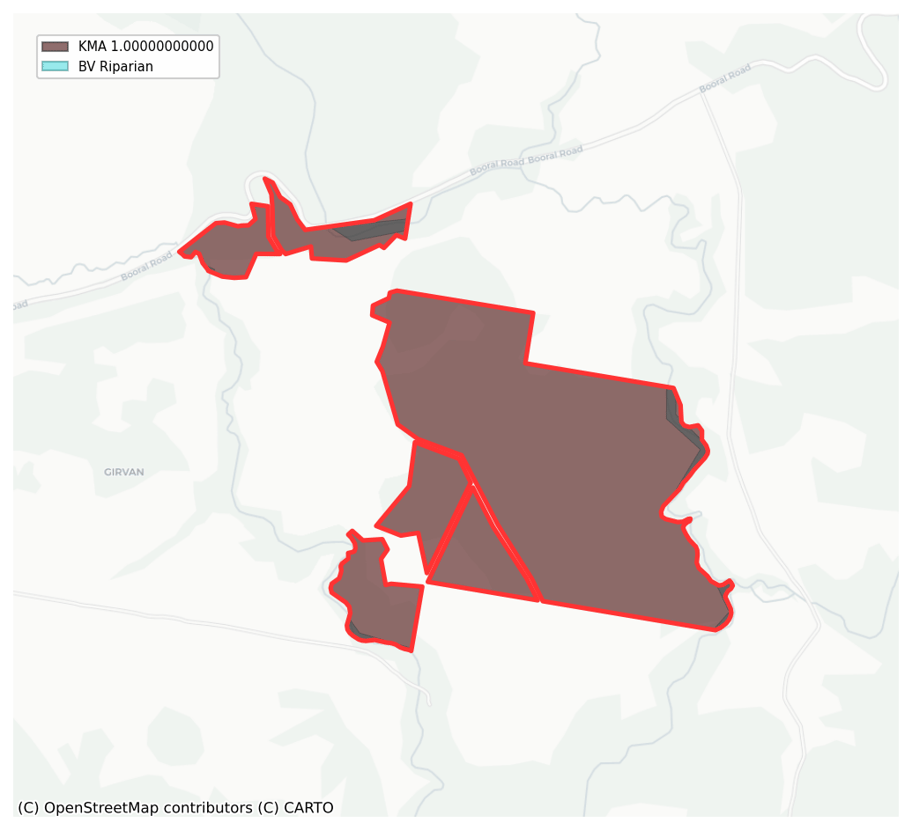
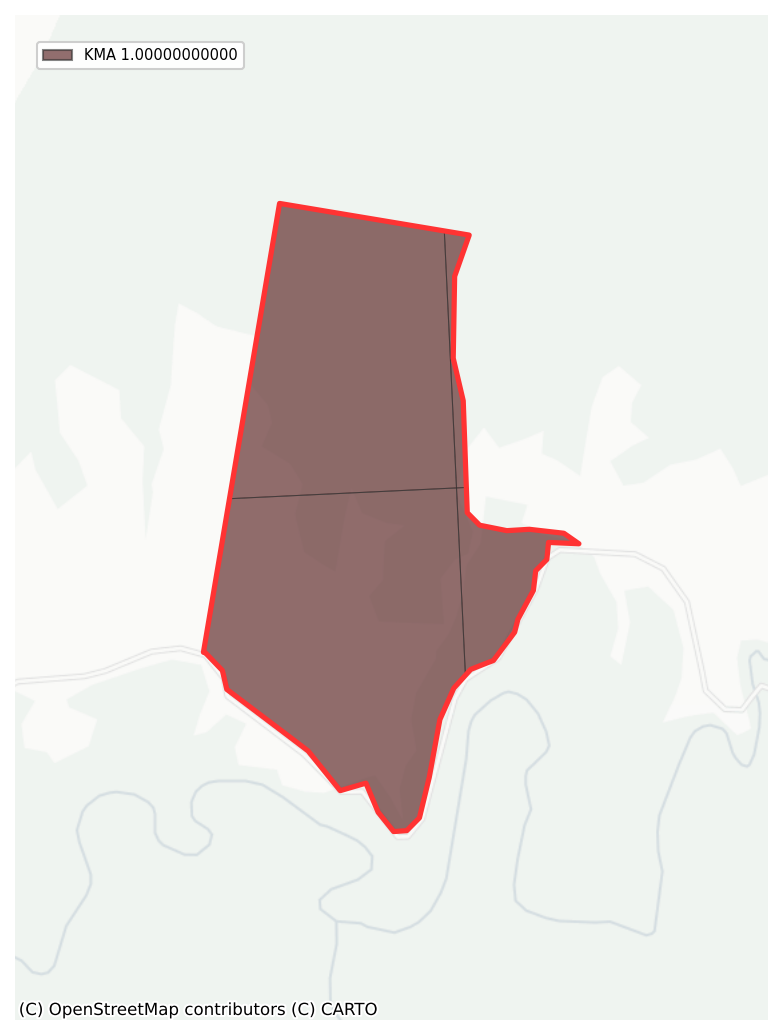
Koala Habitat
Since the 2020 amendments to the Biodiversity Conservation Act, koala habitat mapping has become one of the most commercially significant constraint layers in eastern NSW.
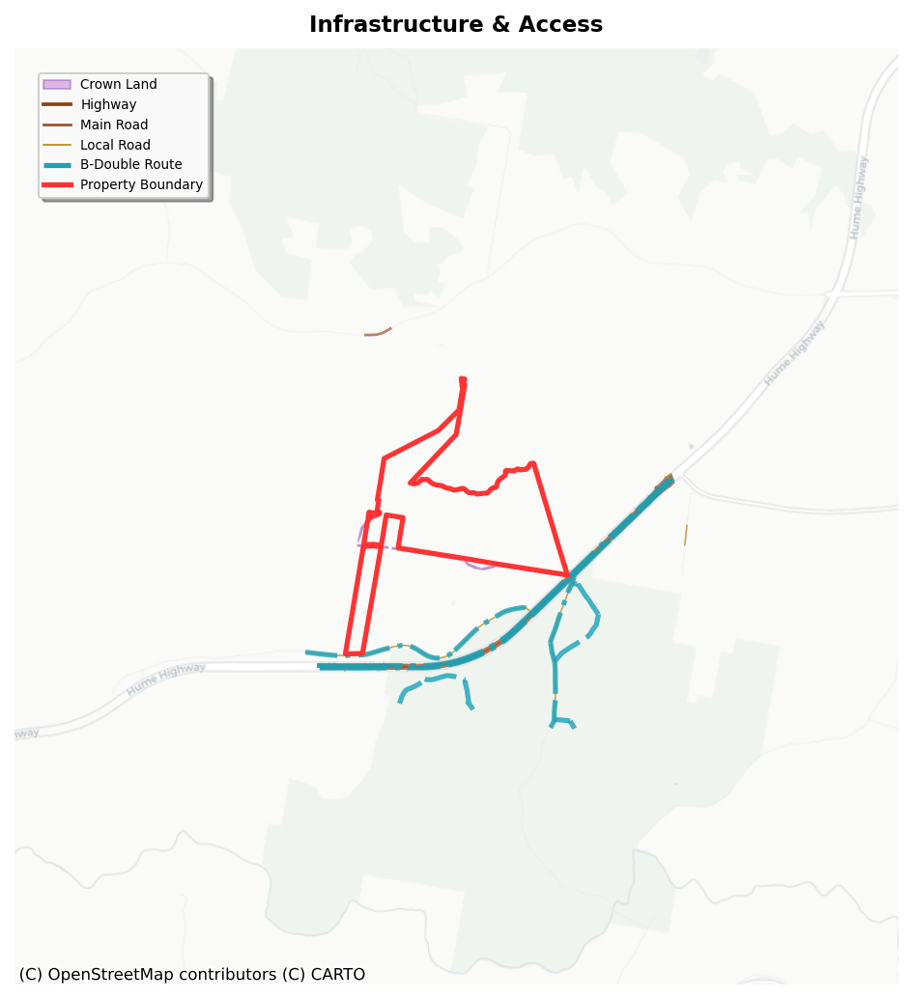
Infrastructure — The Practical Reality
Environmental constraints tell you what you can’t do. Infrastructure constraints tell you what’s practical to do.
Part 3: The Constraints Nobody Mentions
The layers above — bushfire, vegetation, species, zoning, koala, infrastructure — are the ones most property professionals know about. They account for perhaps 30 of the 134 datasets MapCheck indexes.
The remaining 100+ are the ones that catch people. Here are twelve that land buyers, their lawyers, their valuers, and their lenders almost never see coming:
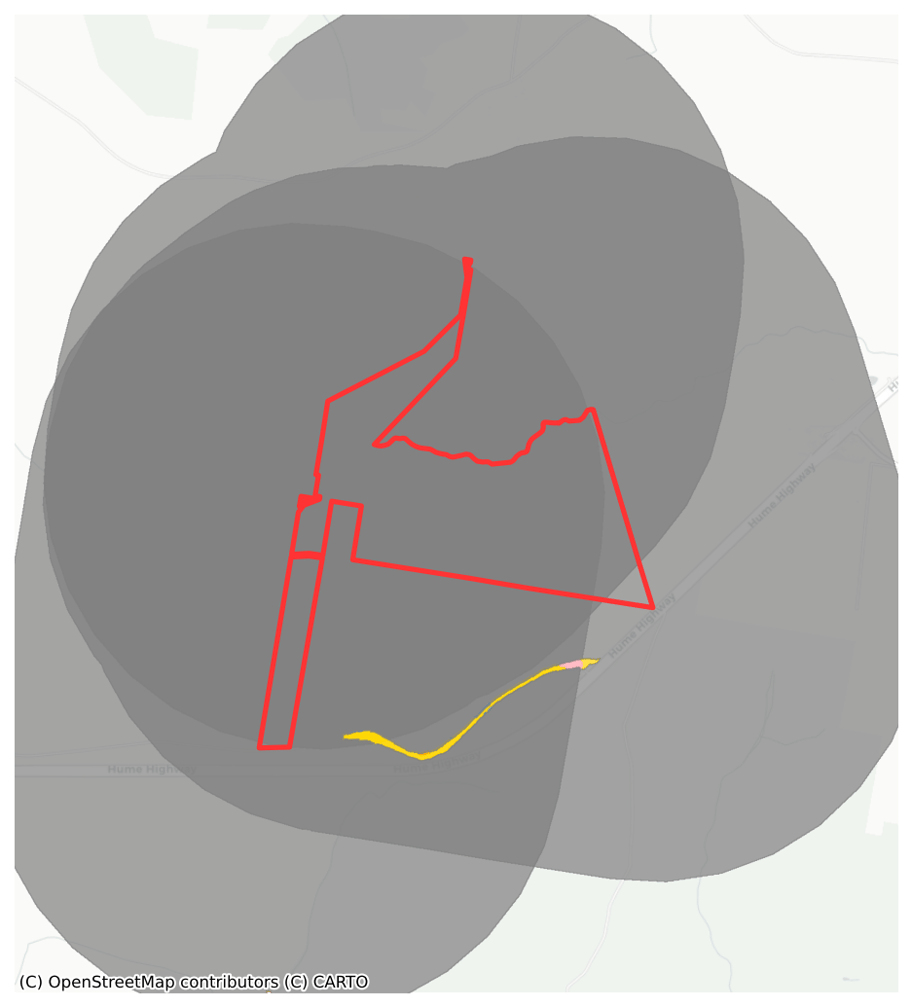
1. Airport Obstacle Limitation Surfaces. An invisible 3D cone projected from any certified airport — including regional strips and helipads — that caps building height for kilometres in every direction. Properties nowhere near a visible runway can be silently constrained. 151,000 NSW lots are affected.
2. Defence Communications Buffers. Restriction zones around military communications sites where any vertical structure may require approval. Only 1,500 lots affected — but if you’re one of them, your DA is going nowhere without Commonwealth sign-off.
3. Mine Subsidence Districts. 30 polygons covering large areas of the Hunter Valley, Illawarra, and Western Coalfields. Every footing poured, every structure erected, every excavation dug requires Subsidence Advisory NSW approval — even on freehold land, even decades after mining ceased.
4. Naturally Occurring Asbestos (NOA) Risk Areas. Serpentinite belts along the Great Dividing Range where earthworks, road grading, or dam construction can release airborne asbestos fibres. An unknown constraint that becomes a very expensive one when a SafeWork NSW inspector visits.
5. Sensitive Aboriginal Landscape Overlays. These are not the gazetted Aboriginal Places listed under the NPW Act (which are point locations with 200m buffers). These are broad landscape-scale overlays under EPI local provisions — only 60 polygons in the state, but they cover significant areas and can fundamentally alter what’s permissible.
6. Explosive Storage, Landfill, STP, and Odour Buffers. Tiny polygons — some as few as 3 lots statewide — but they impose absolute development exclusion zones. A sewage treatment plant buffer on one lot in a subdivision can sterilise an entire yield plan.
7. Travelling Stock Reserves (TSRs). Crown reserves with public-access and stock-movement rights that pass directly through freehold titles. 45,000 lots in NSW carry a TSR overlay. The grazier next door may have a legal right to move 500 head of cattle through your property on a route your title search never mentioned.
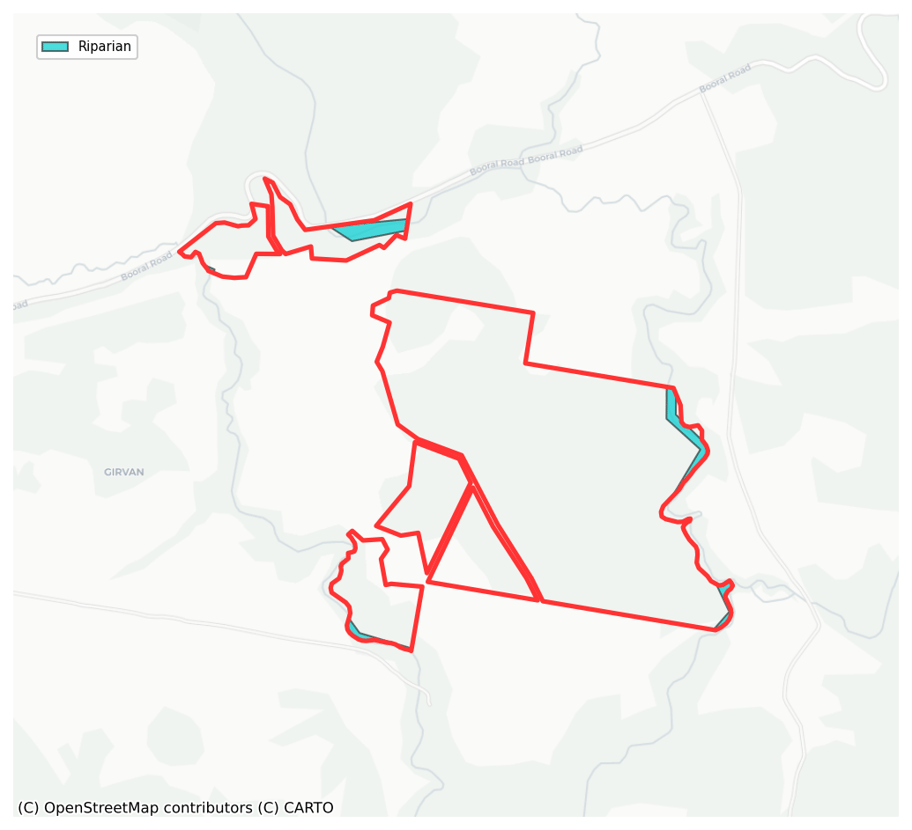
8. Biodiversity Values Map ���Red-Flag” Areas. Under the BC Act, land flagged on the Biodiversity Values Map triggers a mandatory biodiversity assessment for any clearing above the threshold. Some areas are further classified as SAII (Serious and Irreversible Impact) zones — land where offsets are effectively impossible and any development that reduces the ecological value can be refused outright.
9. Acid Sulfate Soils (Classes 1–5). Coastal and estuarine properties may sit on acid sulfate soils that, when disturbed, release sulfuric acid into waterways. A Class 1 classification means any earthworks at any depth require a management plan. Class 5 extends the trigger to 500m landward of Class 1–4 areas. 335,000 lots carry this constraint.
10. Groundwater Vulnerability. An EPI overlay that restricts activities that could contaminate aquifers — including on-site sewage, agricultural chemicals, and even certain building materials. Triggers controlled-activity approvals under the Water Management Act.
11. Foreshore Building Lines. Setbacks from tidal waterways that override your zone’s building envelope. In some coastal LGAs, these lines sit 20–50m landward of the high-water mark, effectively sterilising the most valuable portion of a waterfront lot.
12. Key Sites Overlay. Under clause 7.24 of the Standard Instrument LEP, councils can designate individual lots as “key sites” and impose bespoke development controls. These controls can appear with minimal public notice and don’t always show up on the standard planning certificate.
Part 4: Why Your Current Due Diligence Misses Half of This
The standard property due-diligence process in NSW relies on three documents:
- Section 10.7(2) Planning Certificate — lists 30+ matters the council is required to disclose. Covers zoning, heritage, flood, bushfire, contamination, and a handful of environmental overlays. Does not cover species data, NVR categories, PCT mapping, IBRA subregion classification, grid capacity, road quality, koala habitat likelihood, dam potential, or any of the 90+ datasets that sit outside the EPI overlay system.
- Title Search — shows registered interests (easements, covenants, caveats) but nothing about spatial constraints. A mining title overlay from the 1970s that affects your lot won’t show on your title unless someone registered it as a covenant.
- Vendor Disclosure (Contract for Sale) — vendors are required to disclose “material defects” but the definition of what’s material is tested after the fact, usually in litigation, usually after money has changed hands.
The gap between what these documents reveal and what actually constrains a property is where risk lives. A $30,000 legal due-diligence engagement will catch perhaps 40–50 of the 134 layers — the ones a competent solicitor knows to look for. The other 80+ sit in spatial databases that lawyers don’t access, valuers don’t check, and lenders don’t require.
This is not a criticism of the professionals. It’s a structural problem: the constraint data is scattered across a dozen agencies, published in different formats, at different scales, with different update cycles, and with no central index that connects it to the cadastral lot it affects.
Until someone builds that index.
Part 5: A Visual Tour — 51 Maps Across 16 Constraint Types
Below is a curated gallery showing how constraint layers render on real NSW properties from across the state — from the Hawkesbury sandstone to the Barrington Tops rainforest to the Monaro alpine heath. Every map is generated from NSW government spatial data, indexed at the lot level by MapCheck.
The point is not to overwhelm — it’s to demonstrate what comprehensive looks like, and why anything less is a gap.
Satellite Boundaries — The Starting Point
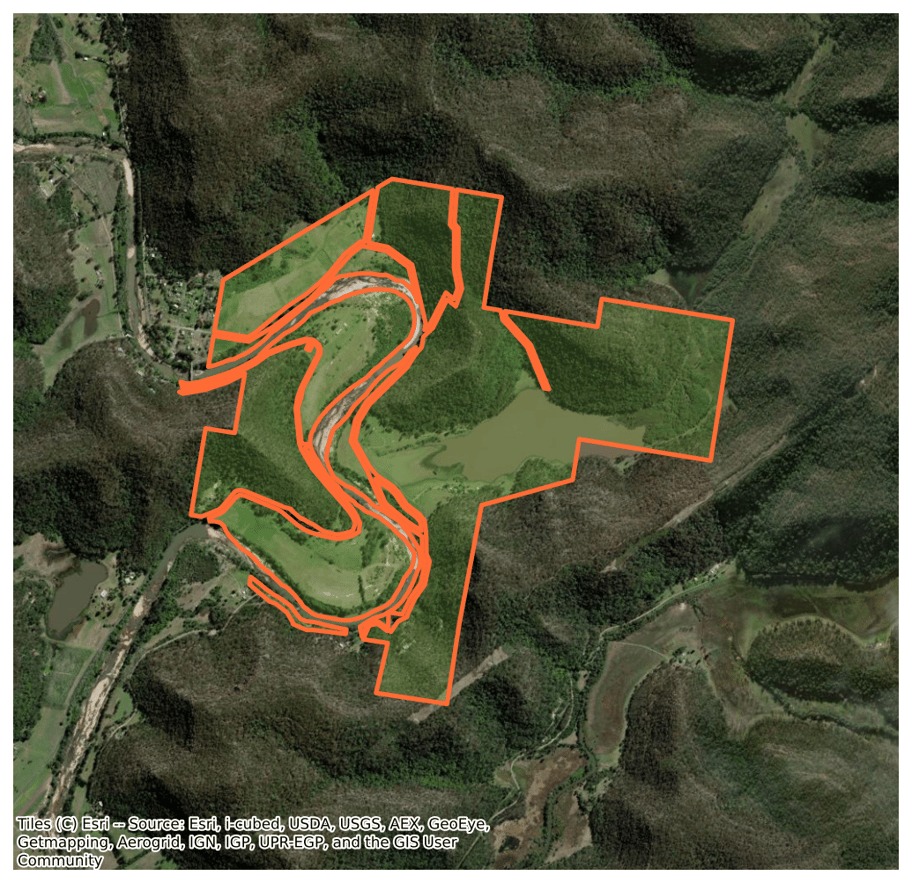
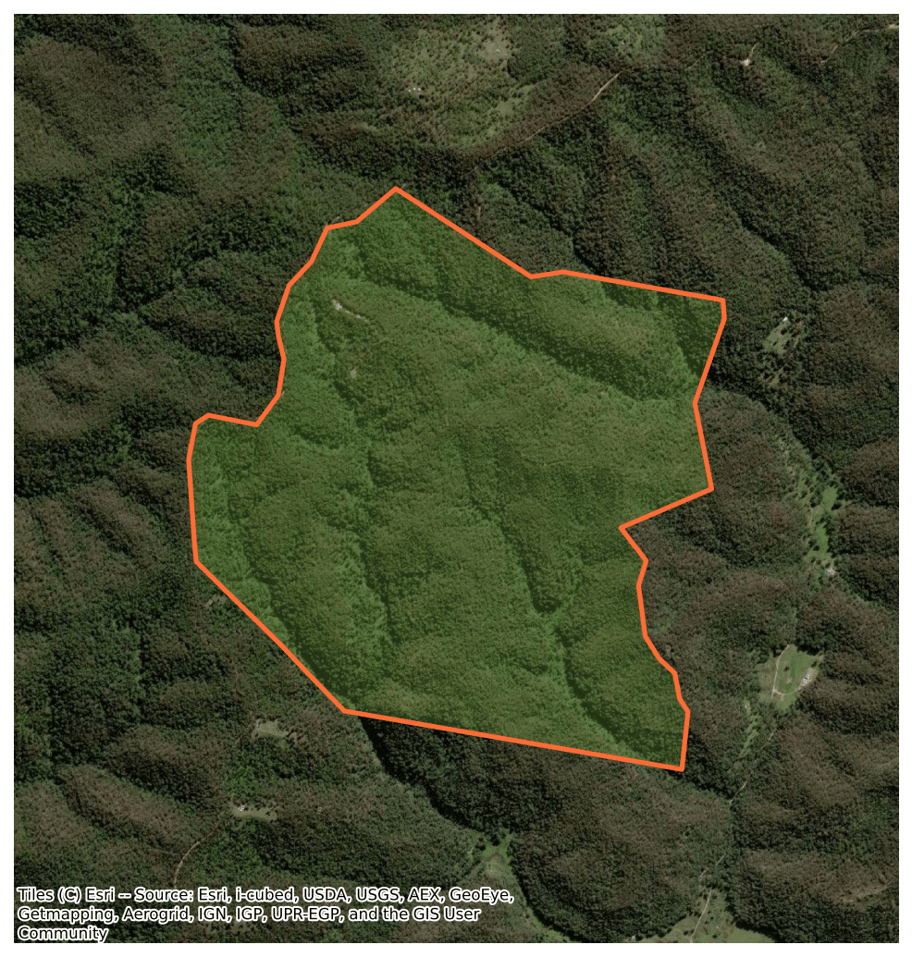
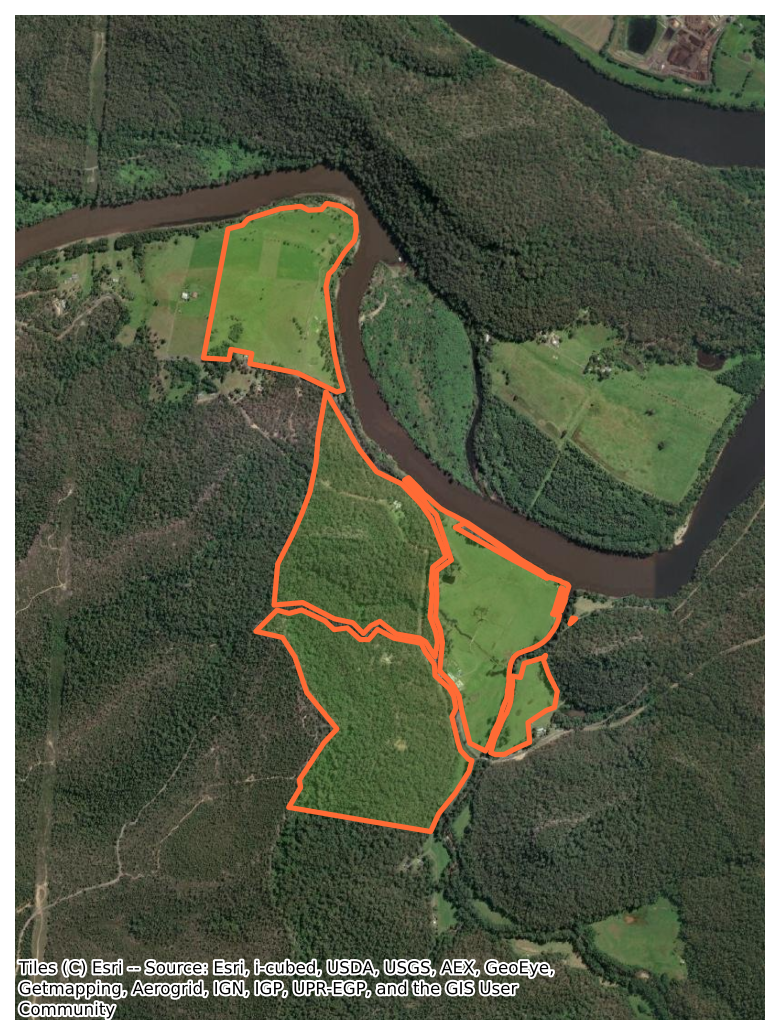
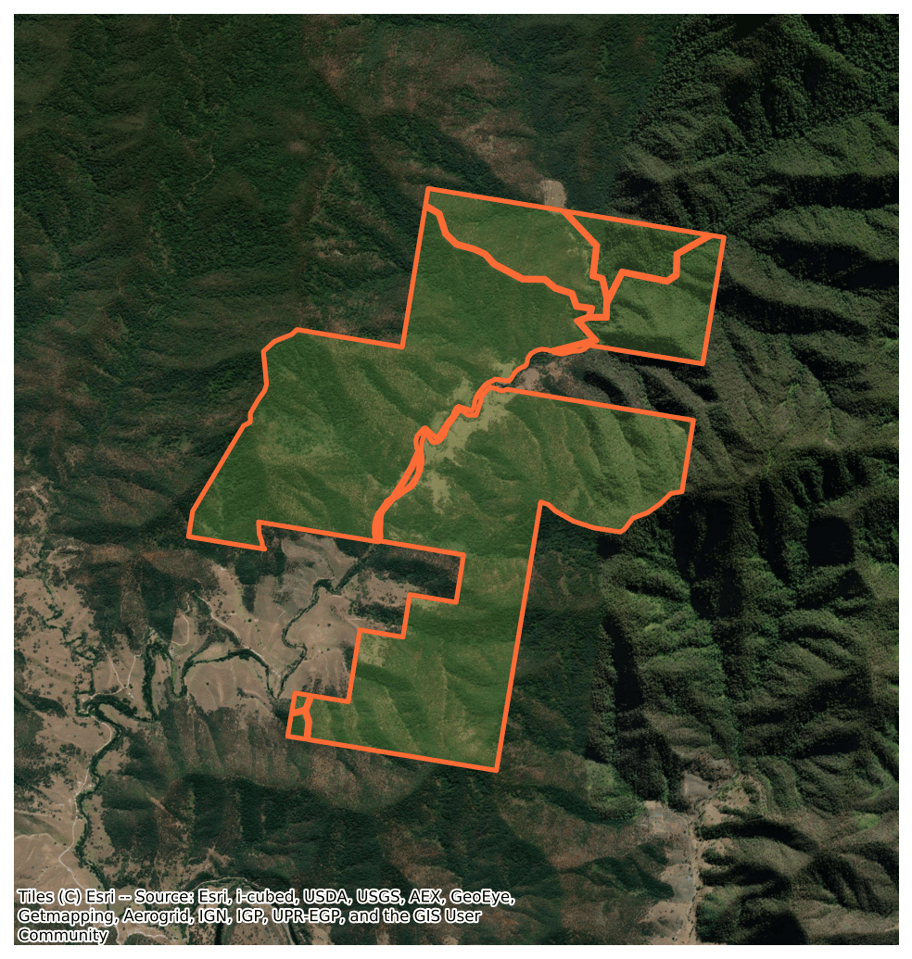
Every assessment begins with the lot boundary on satellite imagery. These four properties span from 157 ha to 1,273 ha, from single lots to 22-lot holdings.

Bushfire Prone Land


Native Vegetation Regulatory Map (NVR)

Plant Community Types (PCTs)


Biodiversity Values Map

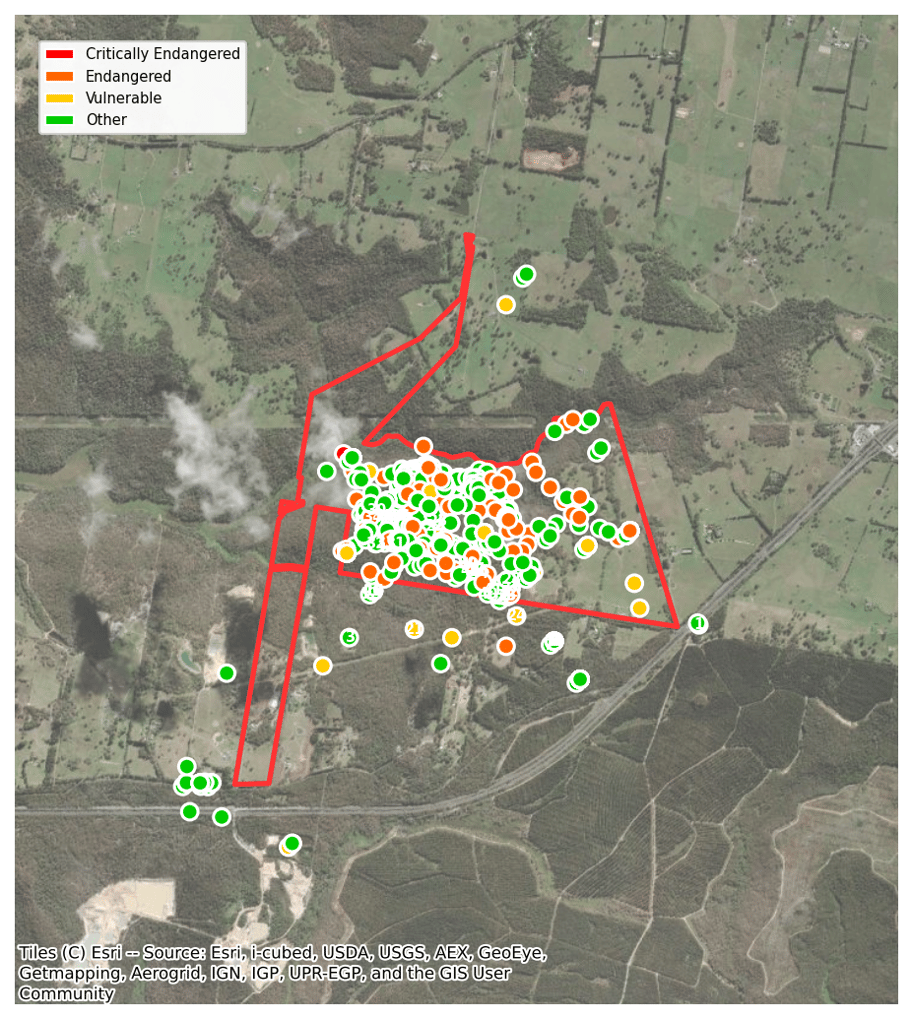
Threatened Species Sightings

Land Zoning

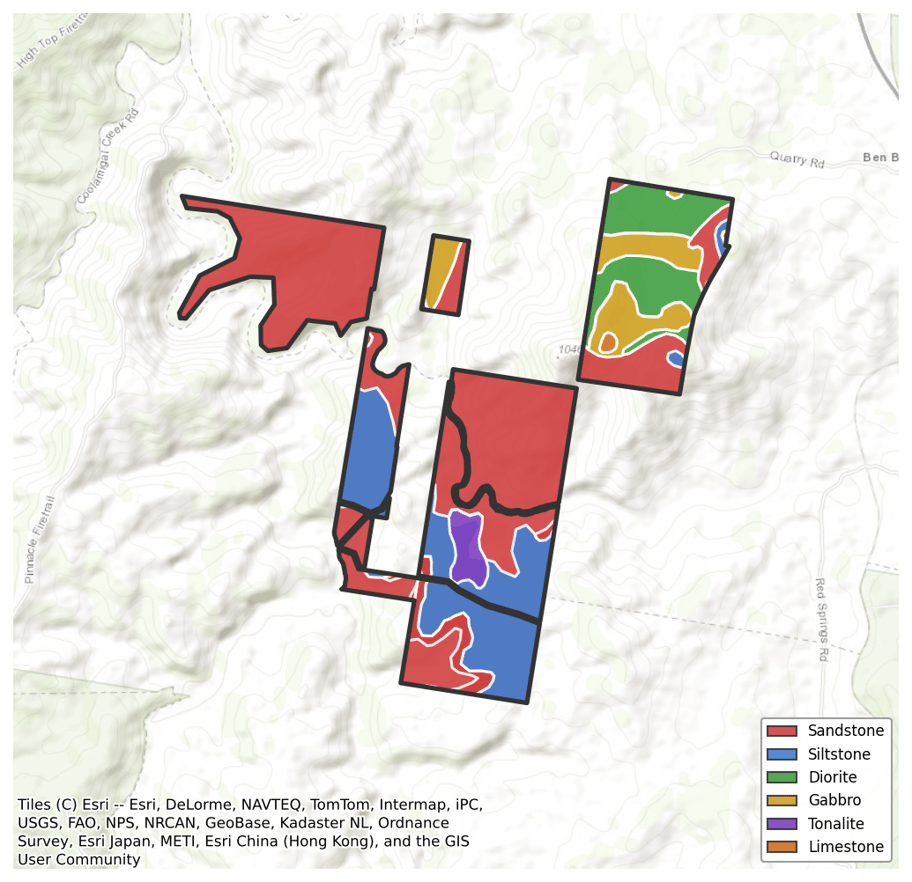
Geology
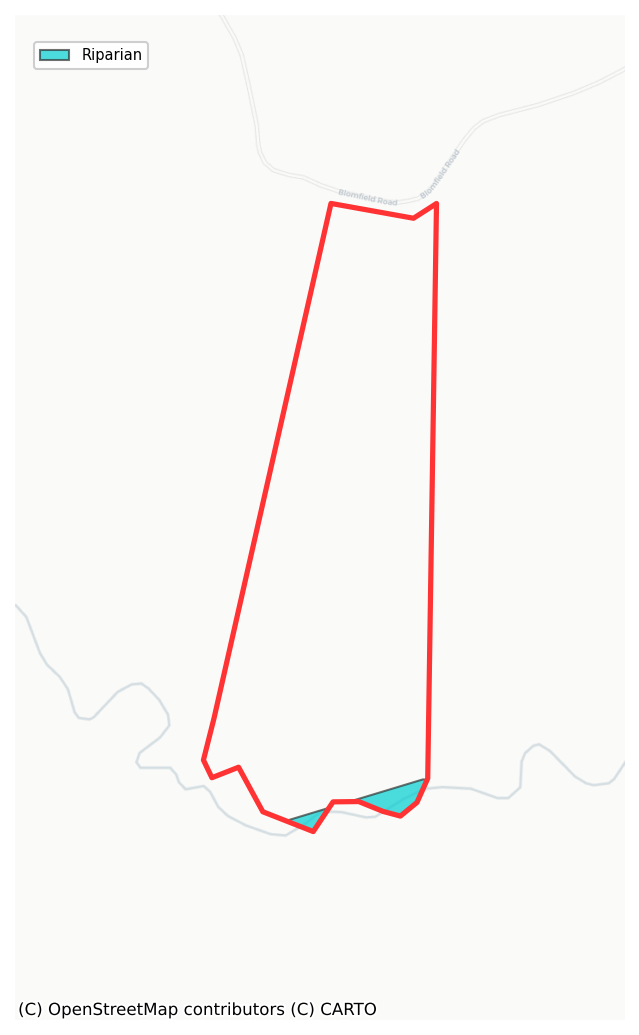
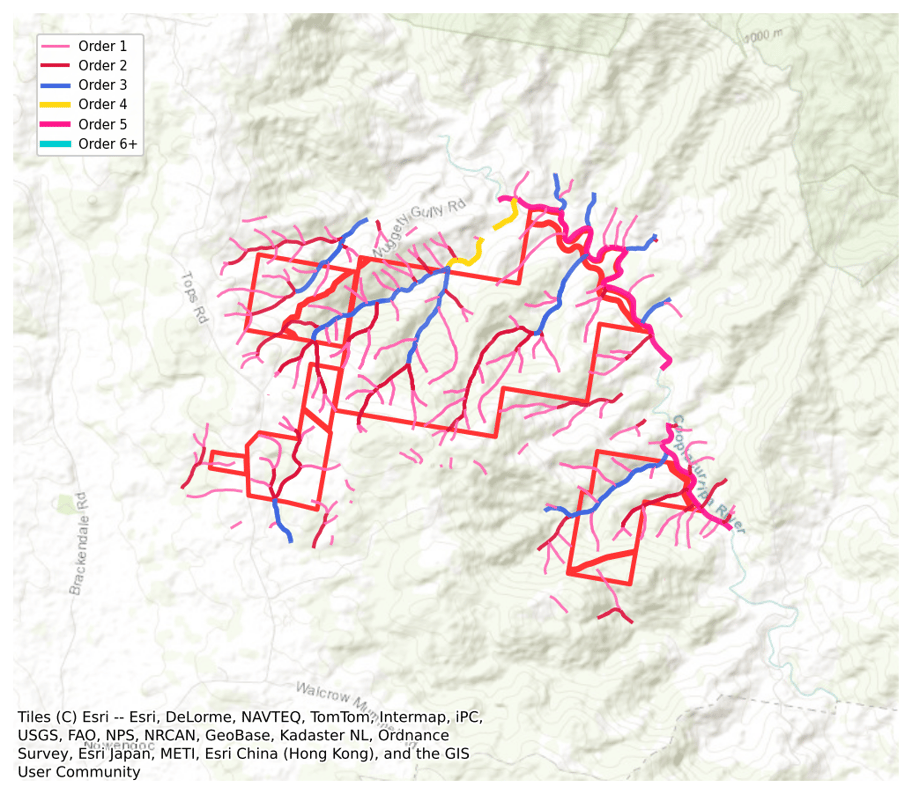
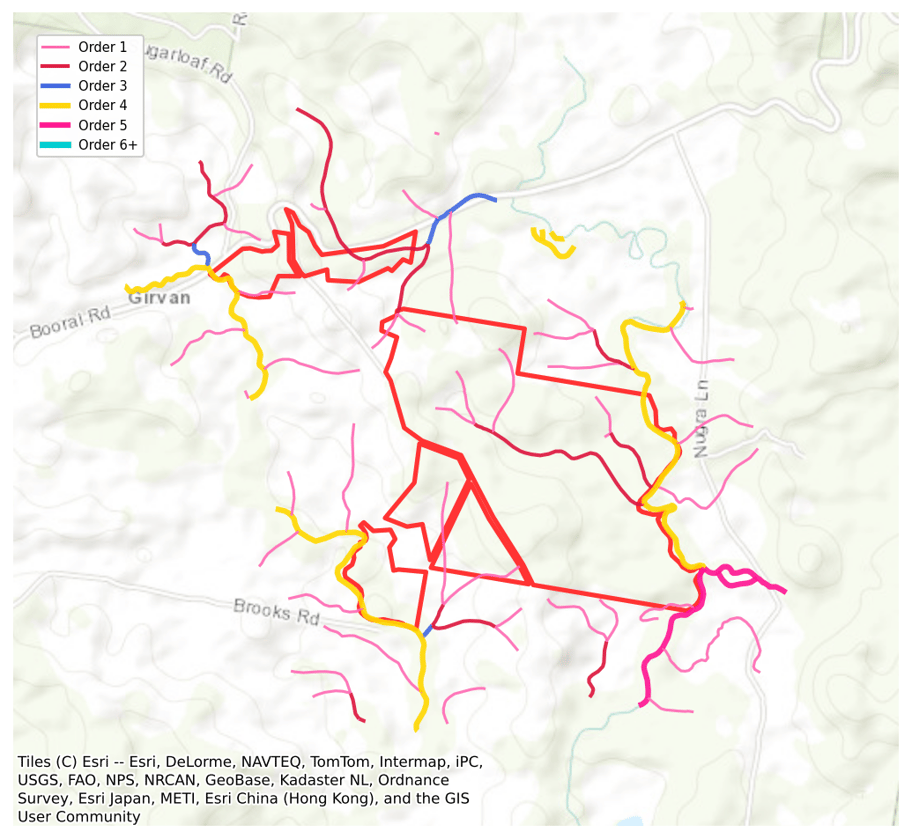
Streams, Dams & Water

Koala Habitat
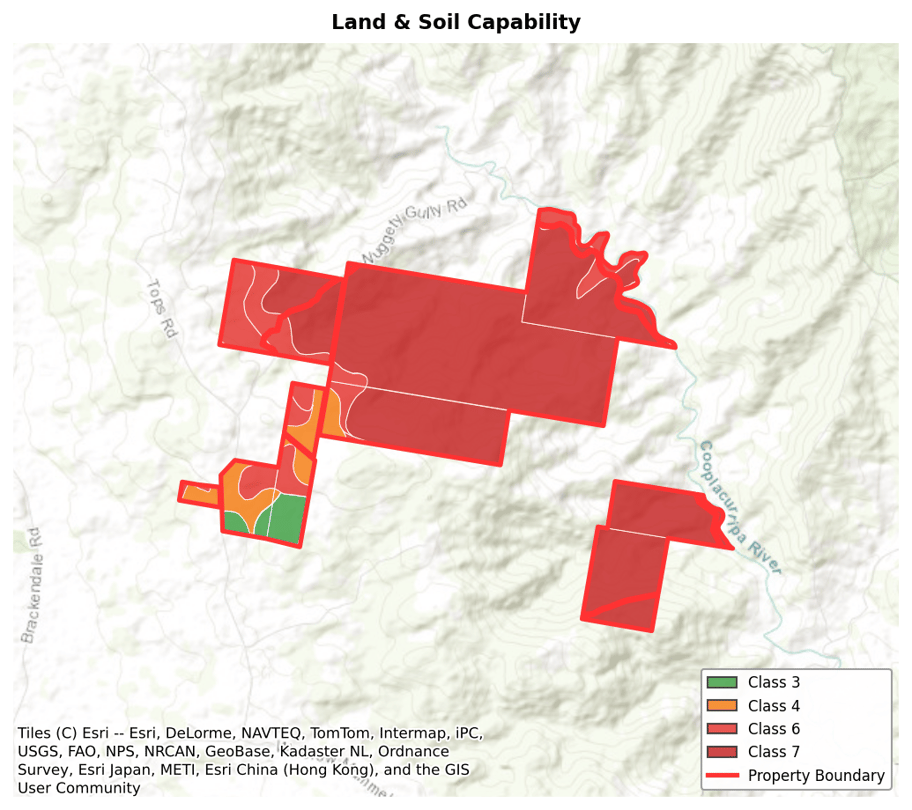
Land & Soil Capability (LSC)
Infrastructure & Access
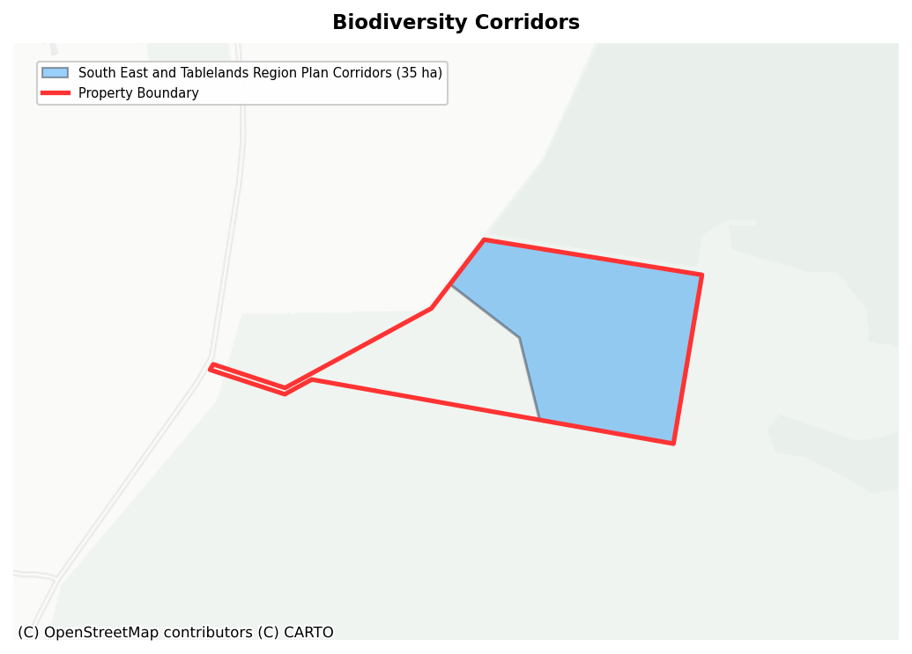
Bio Corridors
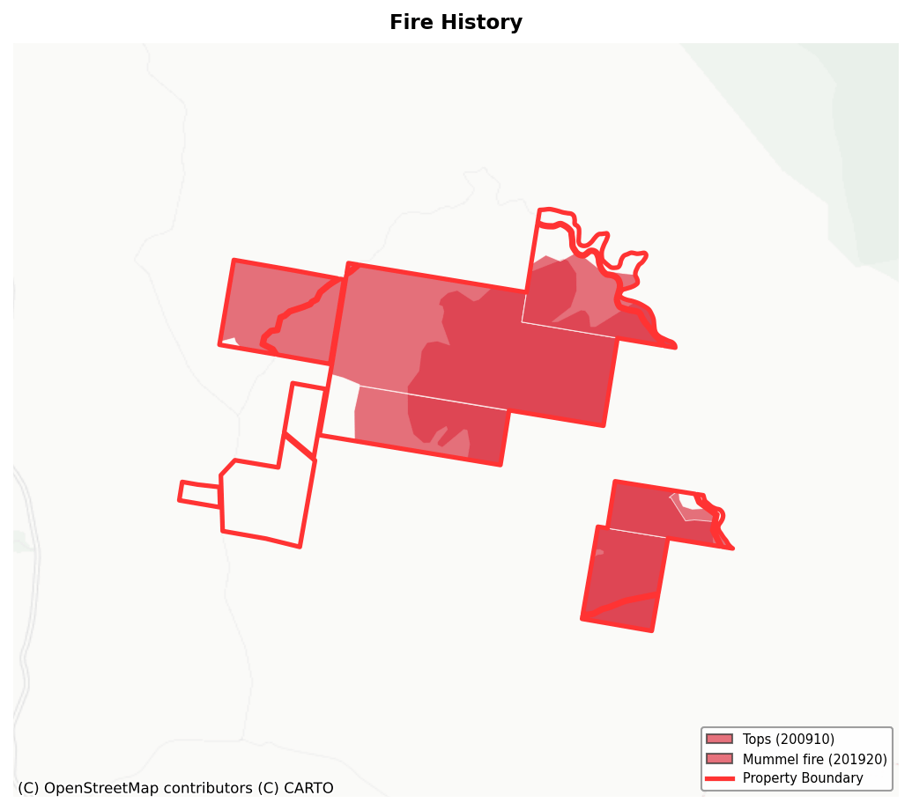
Fire History
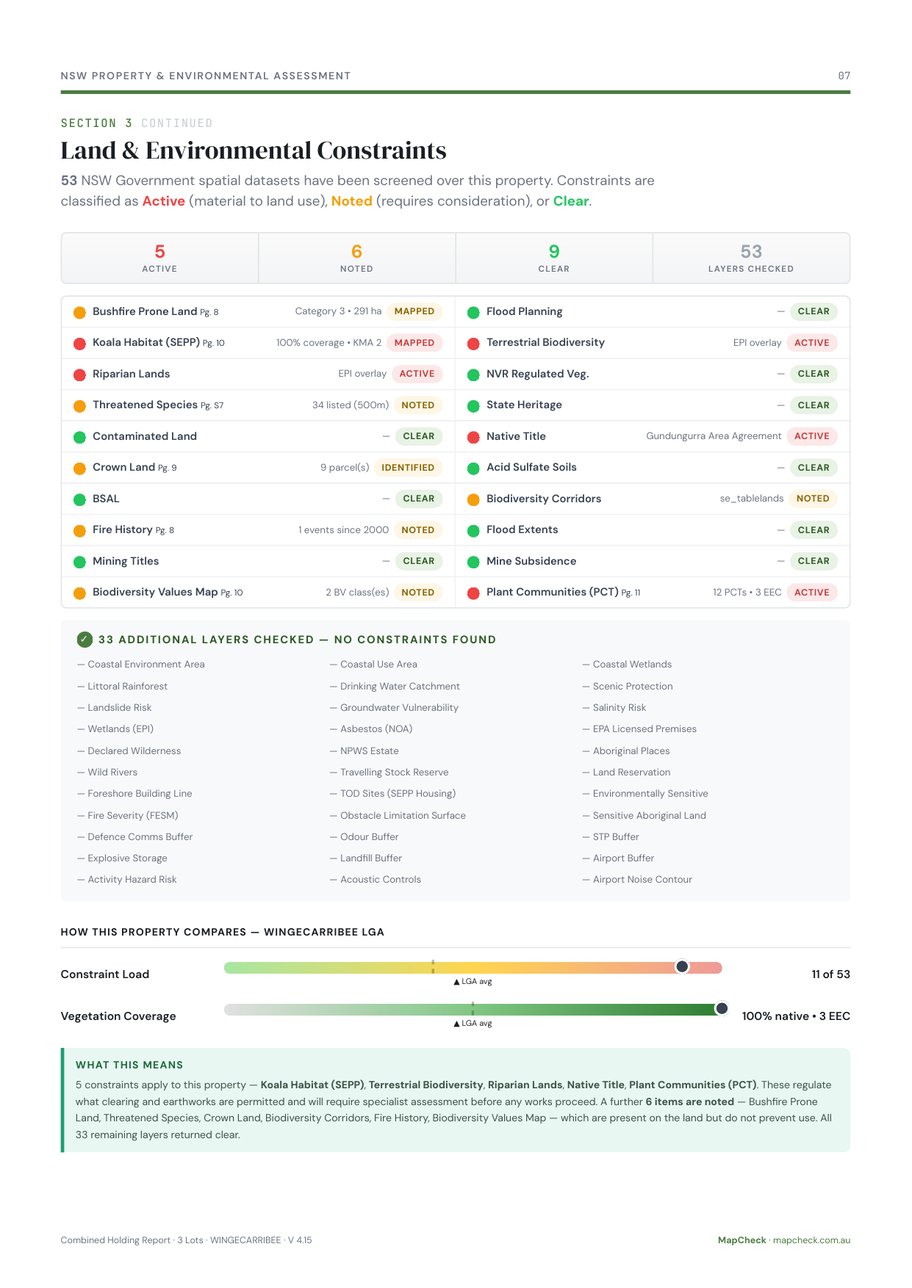
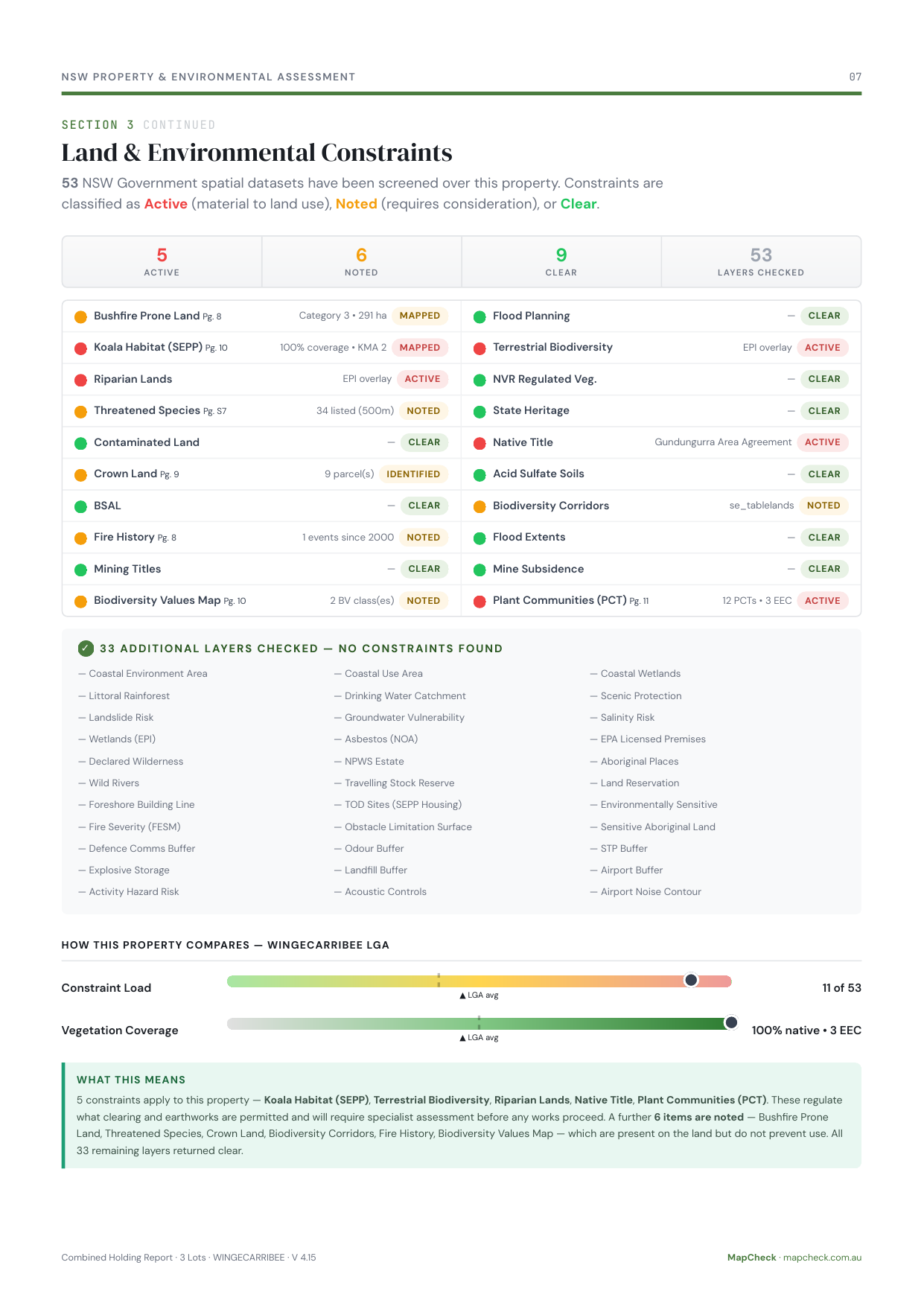
Constraint Summary — The Full Picture

Part 6: What MapCheck Does Differently
MapCheck indexes 134 NSW government spatial datasets against every one of the state’s 3.34 million cadastral lots. Not as a search tool — as a pre-computed, lot-level database containing over 2.13 billion data points across 35+ indexed summary tables.
When you request a MapCheck Property & Environmental Assessment, the system:
- Screens all 134 constraint layers against your specific lot(s) — not a buffer, not a nearby search, but a direct spatial intersection with the lot boundary
- Classifies each constraint as Active (material to land use), Noted (present but manageable), or Clear (not detected)
- Quantifies the constraint — not just “bushfire prone: yes” but “525 ha of Category 1 bushfire prone land covering 100% of the lot”
- Maps every layer — 13 thematic maps per property showing exactly where each constraint sits relative to the lot boundary
- Contextualises the finding — what does the constraint mean for development consent, biodiversity credit potential, grazing capacity, infrastructure access, and market value?
The result is a 20+ page assessment that covers what a planning certificate, title search, and legal review cover — plus the 80+ datasets they don’t.
134 constraints. One report. Most of our clients read theirs in ten minutes and discover at least one thing they didn’t know.
It’s almost always the one that would have cost them the most.
Appendix: Where the 134 Come From
For transparency, here’s how the 134 breaks down by category:
| Category | Datasets | Examples |
|---|---|---|
| Vegetation & ecology | 12 | PCT, OTG, BV Map, terrestrial biodiversity, bio corridors, BDAR species, littoral rainforest |
| Species (BioNet buffers) | 5 | On-lot, 100m, 200m, 500m, 1km sighting buffers |
| Fire | 3 | Bushfire Prone Land, NPWS fire history, fire severity (FESM) |
| Flood & water | 12 | Flood extents, flood planning, streams (2 buffers), estuaries, wetlands, drinking water, riparian lands, dam potential |
| Aboriginal & cultural heritage | 4 | Gazetted Aboriginal Places, sensitive Aboriginal landscape, Aboriginal cultural significance, state heritage |
| EPI / SEPP overlays | 23 | Acid sulfate, airport noise/buffer, defence comms, explosive storage, foreshore, groundwater, landslide, mineral resource, obstacle limitation, scenic protection, coastal wetlands |
| Land use & capability | 6 | Land use, LSC, soil, Mitchell landscapes, BSAL, NVR clearing |
| Geology & hazards | 4 | Geology, mine subsidence, mining titles, naturally occurring asbestos |
| Crown / public / native title | 5 | Crown land, NPWS estate, wilderness, TSR, native title |
| EPA contamination | 2 | Contaminated sites, EPA licence premises |
| Electrical & grid | 8 | Grid capacity, HV infrastructure (3 distributors × 2 tables each), underground cables |
| Roads & access | 2 | Road quality summary, NHVR heavy vehicle access |
| Zoning | 1 | EPI land zoning summary |
| REZ & visibility | 5 | REZ boundaries, REZ viewshed (2), corridor viewshed, visibility summary |
| Koala habitat | 3 | Koala likelihood, habitat suitability (KHSM), ARKS corridors |
| Valuation & credits | 2 | Credit valuation (BCF pricing), species credit summary |
| Privacy | 1 | Privacy index (dwelling proximity, vegetation screening, road visibility) |
| Core lot-indexed datasets | 98 | |
| Additional layers (live DB) | 36 | Ramsar wetlands, SNES species, World/National/Commonwealth heritage, CAPAD, GDE aquifers, HBT likelihood, NPWS proximity, IBRA subregion, SES flood layers, mobile/NBN coverage, erosion gully, successional stages, dormant mines, key sites, and more |
| Grand total (live, April 2026) | 134 | Re-indexed quarterly as NSW Government agencies publish new datasets |
MapCheck — 2.13 billion data points · 134 lot-indexed datasets · 3.34 million NSW lots · mapcheck.com.au
Image Credits: All maps generated by MapCheck from NSW government spatial data (EPI layers via NSW Planning Portal Open Data, BioNet sightings via DCCEEW, NVR via NVR Map, PCT via BioNet Vegetation, bushfire via NSW RFS, infrastructure via Essential Energy / Ausgrid / Endeavour Energy, zoning via EPI land zoning). Satellite basemap: Esri World Imagery. Clean basemap: CartoDB Positron. Properties shown are from the NSW Natural Capital Fund shortlist analysis (April 2026).