What could your land earn from biodiversity credits, and is anyone buying?
A credit has no single price. It is worth what a buyer will pay. This report prices the credits your land could produce from what credits have actually sold for, not just the published rate, and checks whether there is demand for them.
Three answers a yield estimate alone can't give you.
What credits really sell for
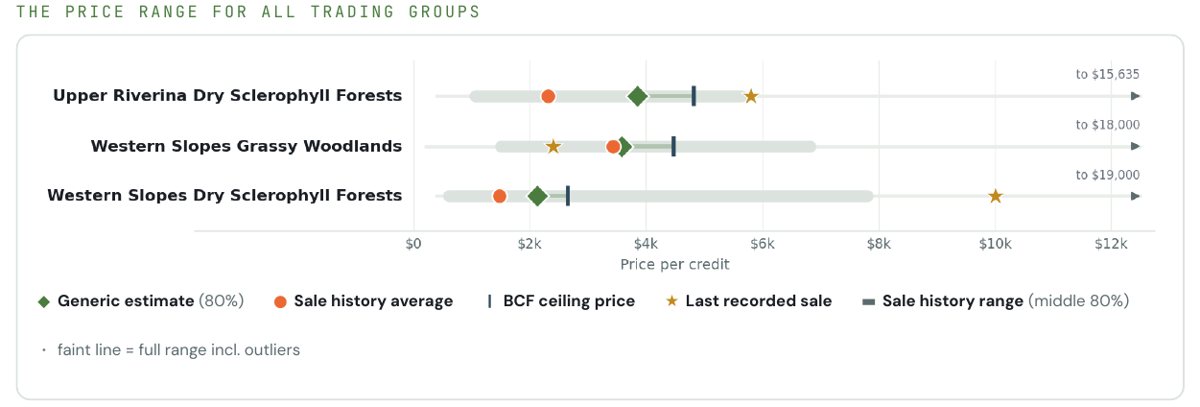
The published Biodiversity Conservation Fund quote is what a developer would pay into the fund instead of buying credits. It acts as a ceiling. The report sets it beside completed sales from the NSW credit transactions register: the average, the middle 80% of sales, the last sale and how many sales there have been.
Whether there is a buyer
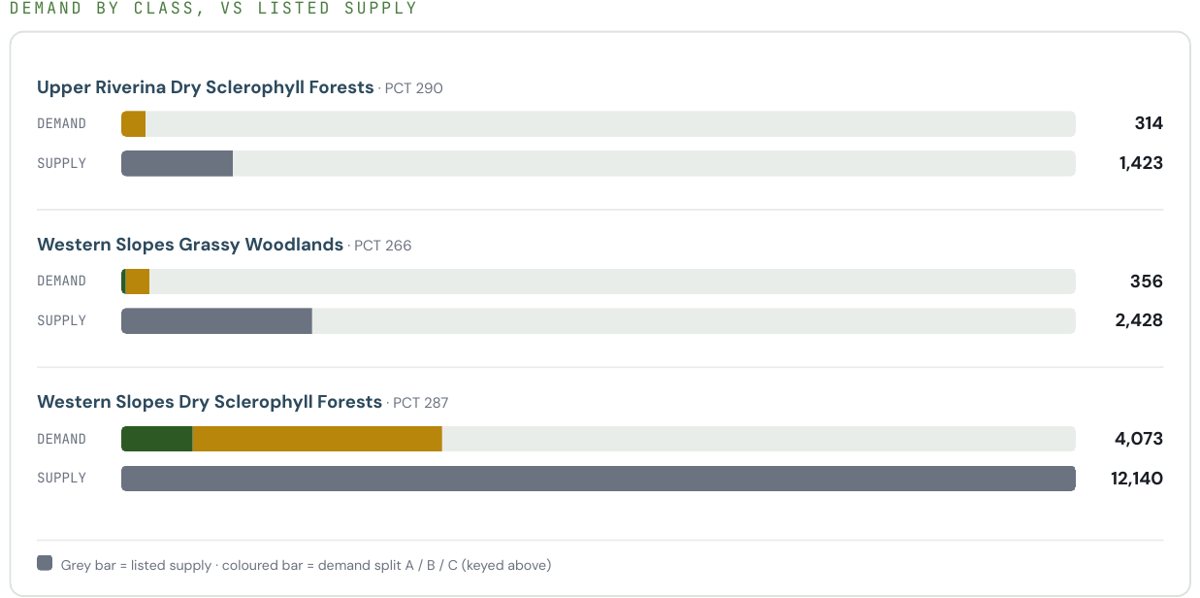
Public demand data is fragmented. We sort it into Future demand (developments not yet approved) and Live demand (approved developments that need credits), then set it against the credits already for sale. Each credit type is marked oversupplied, in balance or unmet demand.
The market value of your credits
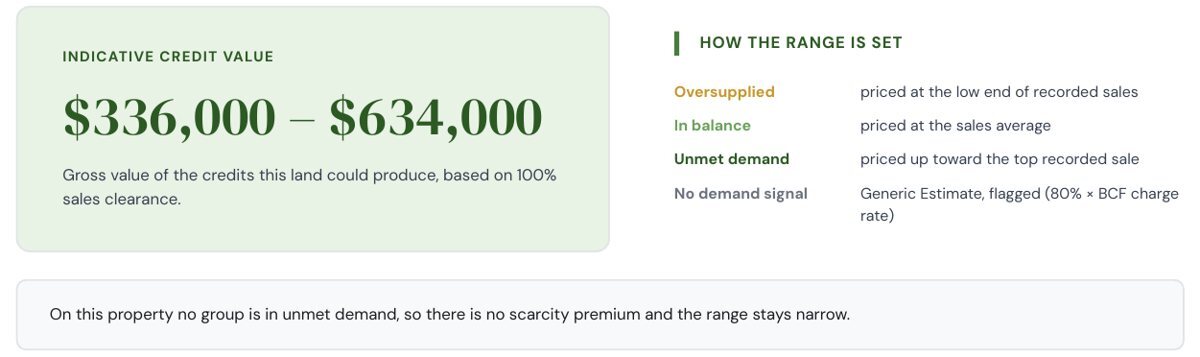
Each credit type is priced by its demand: lower in the sales range where supply runs ahead, higher where demand is unmet, and never above the quote. The result is an indicative value range for your land, not a headline figure with no buyer behind it.
Pages from a de-identified sample report. Click a page to see it full size.
A big credit figure on paper has no real value without a buyer.
Ask about a reportA PDF report on one property.
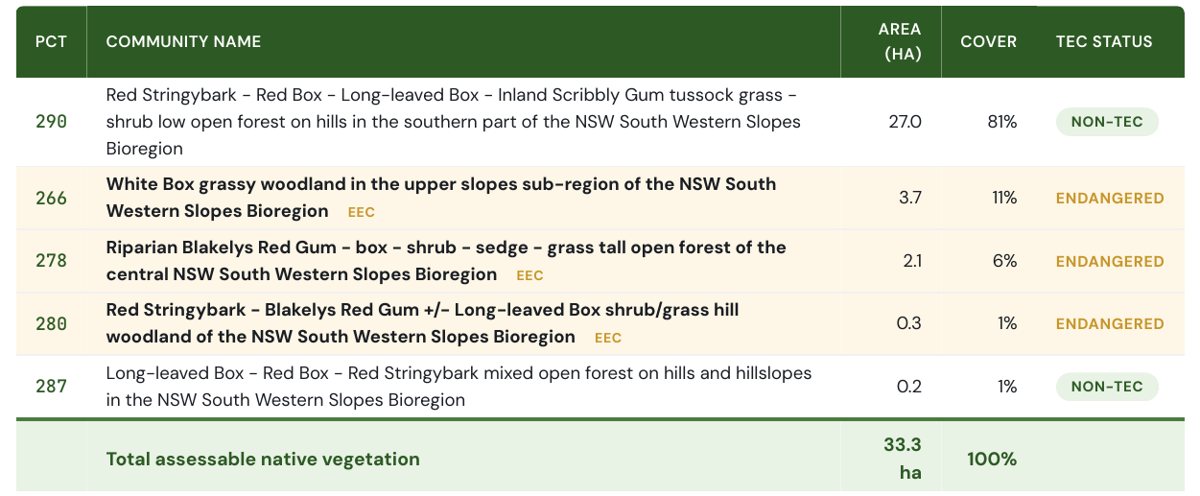
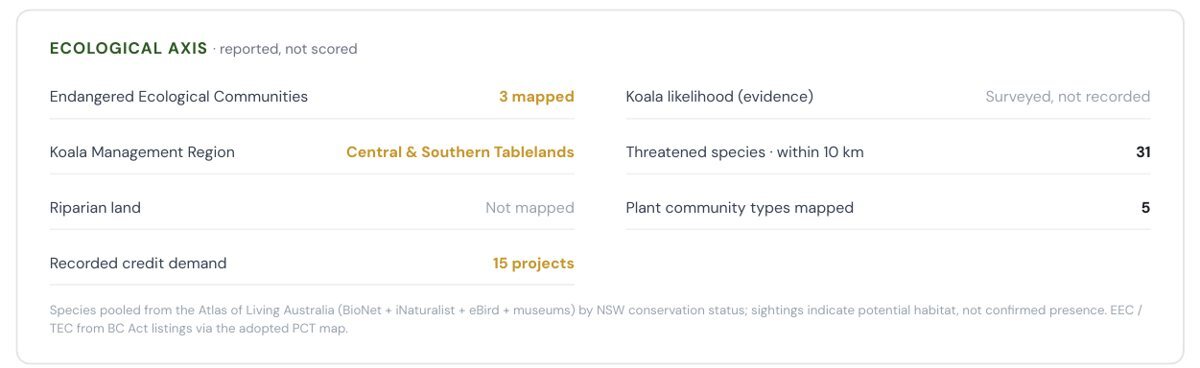
Species credits count only if a field survey confirms the species, so they are shown separately.
Before you commit land, or sign an offer.
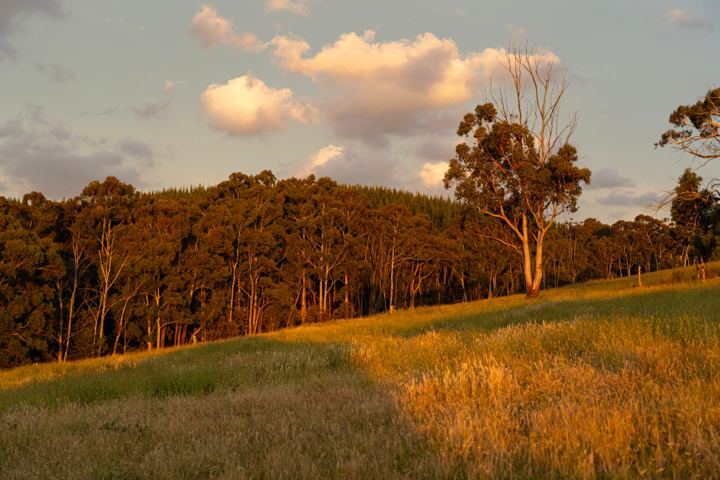
Landowners
Looking for another source of income from land they don't actively use.
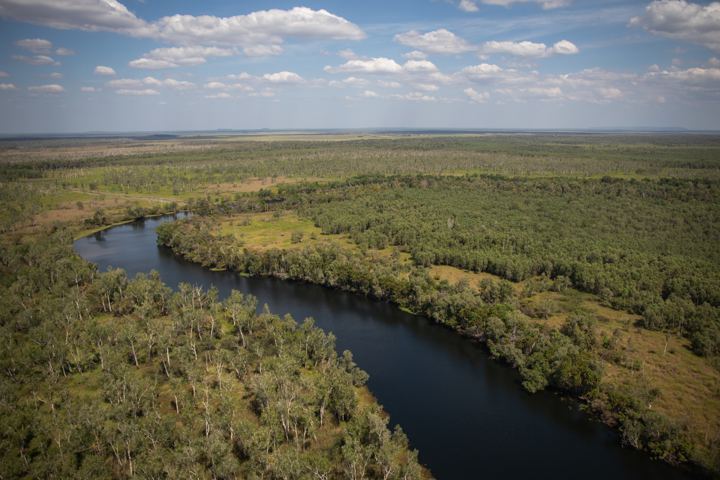
Investors
Looking to buy land to set up a Biodiversity Stewardship Agreement (BSA).
Owners with an offer
Holding an offer for their land or credits, and wanting independent market evidence before they sign.
The type of credit decides who can buy it.
Ecosystem credits, from the vegetation, can generally only offset a development within 100km, or in the same or a neighbouring IBRA subregion. Species credits, from threatened wildlife, can be used anywhere in NSW.
To sell, you need a buyer whose development carries an offset obligation that matches your credits. This report checks demand as well as yield, so the value range reflects who is actually buying.
- What your land could yield, and whether there are buyers for it
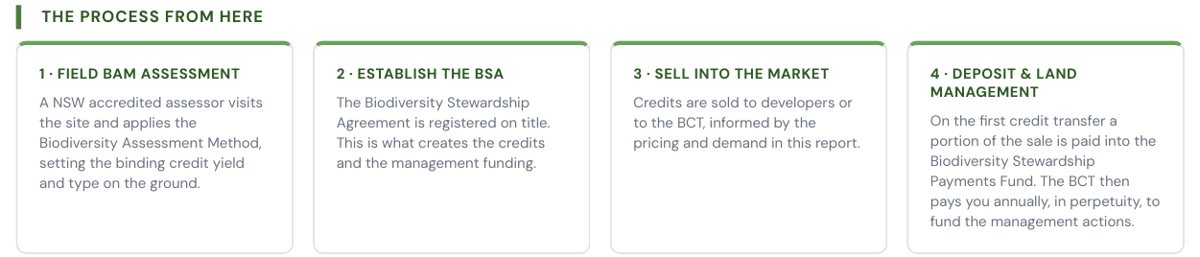
- The basic inputs and investment needed to set up a stewardship site and sell credits
- Who you need to talk to if you want to go ahead
We check your land qualifies before you pay.
Tell us about the property
Where it is, and what you would like to know.
We check it qualifies
Whether the land has vegetation that trades in the credit market. If it has none, we tell you.
We confirm scope and price
Indicative price $1,799, or $5,000 for 5 properties. Confirmed before anything is ordered.
You decide
Order the report, or not. No obligation either way.
Ask about a report.
Your details go to the MapCheck team and nowhere else.
Are the trees on my property worth anything?
They can be, if your native vegetation matches credit types that developers need to offset, and there is demand for them.
How do you work out what the credits are worth?
We estimate credits from the vegetation and threatened species on your land, then price each credit type against the published quote and completed sales, adjusted for supply and demand.
Who buys biodiversity credits?
Developments and infrastructure projects that must offset the native vegetation or species they clear, either directly or through the Biodiversity Conservation Trust.
Do I have to sell my land to sell credits?
No. Under a Biodiversity Stewardship Agreement you keep ownership. The agreement sits on the title and commits that part of the land to conservation management.
Is this a field assessment?
No. It is a desktop screening report with indicative figures. Credits are confirmed only by an accredited assessor using the Biodiversity Assessment Method (BAM). This report helps you decide whether that step is worth paying for.
A desktop screening report, not a field assessment or a value assessment. Credits are confirmed only by an accredited assessor. MapCheck is not affiliated with the NSW Government.