4 min read

Native Vegetation Laws in NSW — What Property Owners Need to Know

Native Vegetation Laws in NSW — What Property Owners Need to Know

Native vegetation in NSW sits under two pieces of legislation that work in tandem: the Biodiversity Conservation Act 2016 (BC Act) and the Local Land Services Act 2013 (LLS Act). Together they decide what you can clear, when you need approval, what you owe the land for management, and what happens when you get it wrong.

This is the practical guide for property owners — not the legal text, but what matters in day-to-day decisions about clearing, development, and ongoing management.

Which zones are affected

The framework applies to:

  • R5 — Large Lot Residential
  • RU1 — Primary Production
  • RU3 — Forestry
  • RU4 — Primary Production Small Lots
  • RU5 — Village
  • C3 — Environmental Management
  • C4 — Environmental Living

If your property is in any of these zones AND contains any amount of native vegetation, the framework applies — regardless of property size or how much vegetation is present.

What counts as "native vegetation"

The legislation includes:

  • Native trees, including saplings and shrubs
  • Native understorey plants
  • Native groundcover
  • Plants occurring in a wetland

Scattered native trees count. So does what looks like "just grass" if it contains native species. Many landowners assume "no trees" means "no regulated vegetation" — that's not how the definition works.

The Biodiversity Conservation Act 2016 — three things that matter

1. The Biodiversity Offsets Scheme (BOS)

Triggered when development or clearing exceeds prescribed thresholds. Triggering the BOS means you'll need to offset the biodiversity impact — by purchasing biodiversity credits or by undertaking equivalent on-ground conservation. Offset costs are property-specific and can run from low five-figures into hundreds of thousands.

2. The Biodiversity Values Map

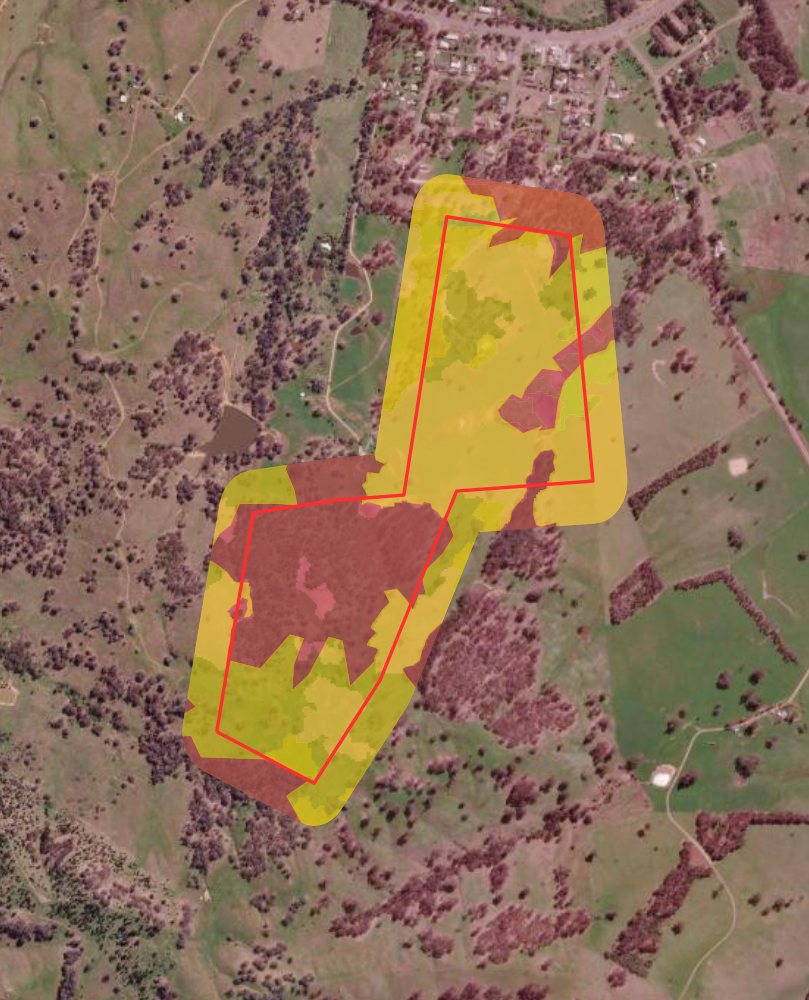
The mapped layer that flags land of high biodiversity value (shown in purple). If your property appears on this map, additional restrictions apply, and clearing is more likely to trigger the Biodiversity Offsets Scheme. Map review is possible but is a formal process — not a quick search.

3. Serious and Irreversible Impacts (SAIIs)

A category of impact applied to particularly damaging effects on threatened species or ecological communities. Development that would cause SAIIs can be refused outright — there's no offset pathway for impacts in this category.

Want this for your specific property?

A Property & Environmental Assessment runs your address through 140+ NSW datasets and gives you the full picture in 2 business days. 24-page report. Plain language. Designed to be read by a buyer, not an ecologist.

Order PEA — AU$1,499 →

The Local Land Services Act — three things that matter for rural land

1. The Land Management (Native Vegetation) Code

The Code allows certain clearing activities without a separate development approval, provided specific conditions are met. It governs:

  • Clearing for "allowable activities" (essential farm work)
  • Clearing to improve farm efficiency
  • Management of invasive native species
  • Clearing of paddock trees (subject to conditions)

The Code is the most important legal document for many farm-management decisions, and it has been amended multiple times — so checking the current version matters.

2. Property Vegetation Plans (PVPs)

Plans setting out the agreed management approach for vegetation on your property. PVPs run with the title — meaning if a previous owner entered into a PVP, you've inherited it. They can constrain land use for decades.

3. Set Aside Areas

When clearing under certain parts of the Land Management Code, the framework may require you to set aside other areas of your property for conservation as a balance. Set-asides also run with the title.

Three common scenarios where these laws bite

Scenario 1: Building a new home or extension

If you're planning to build on a property with native vegetation, you'll likely need to:

  • Check the Biodiversity Values Map status
  • Determine whether the clearing area exceeds the threshold (typically 0.25–0.5 hectares, depending on minimum lot size in the LEP)
  • Engage an accredited assessor to prepare a Biodiversity Development Assessment Report (BDAR) if thresholds are exceeded

A small-area clearing for a house pad on a 5-hectare RU1 block can become a multi-thousand-dollar BDAR exercise depending on the underlying vegetation.

Scenario 2: Expanding farm operations

For rural landholders expanding cropping, grazing, or infrastructure:

  • Some routine agricultural activities are permitted under the Code without approval
  • Code-permitted clearing may carry set-aside requirements on other parts of the property
  • "Improving farm efficiency" pathways exist but require demonstrating the agricultural rationale

The key trap is assuming a specific activity is allowable when it sits just outside the Code's definitions.

Scenario 3: Removing trees around existing structures

Even maintenance can be regulated:

  • The 10/50 Vegetation Clearing Scheme may apply in some bushfire-prone areas
  • Local council tree preservation orders apply on top of state legislation
  • Different rules apply for clearing for fences, access tracks, and bushfire asset protection

Penalties for non-compliance

The penalty framework is structured to deter:

  • Fines up to $5 million for corporations
  • Up to $1 million for individuals
  • Remediation orders requiring restoration of cleared land
  • Criminal prosecution in serious cases

Most actual cases settle well below those maxima, but penalties at five-figure levels with remediation costs added are common.

How to navigate the framework

Step 1: Determine your property's status

Before any clearing or development:

  • Identify your property's zoning (LEP map)
  • Check the Biodiversity Values Map
  • Assess whether native vegetation is present (including grasses)
  • Check the title for inherited PVPs or set-asides

Step 2: Identify which approval pathway applies

Depending on scale and purpose:

  • Local development approval (council) for development pathways
  • State-significant development pathway for larger projects
  • Land Management Code for rural agricultural clearing
  • Biodiversity Offsets Scheme where thresholds are triggered

Step 3: Get specialist input where the picture is unclear

For complex situations:

  • Environmental consultants with BAM accreditation
  • Property planning specialists for development pathway questions
  • Local Land Services officers for rural Code questions
  • Environmental lawyers for inherited PVP/set-aside disputes

The opportunities sitting alongside the obligations

The same framework that imposes restrictions also creates opportunities:

Biodiversity Stewardship Agreements

Properties with significant biodiversity value can generate income through Biodiversity Stewardship Agreements — creating biodiversity credits and selling them to developers needing offsets. For some properties, the stewardship value substantially exceeds the property's agricultural value.

Conservation Agreements

Voluntary agreements that can provide land tax exemptions and rate reductions while protecting valuable native vegetation.

Grant programs

Various NSW and federal programs offer financial support for conservation activities on private land — weed control, revegetation, habitat restoration.

How a Property & Environmental Assessment helps

A PEA consolidates everything above into a single document for your specific property:

  • Zoning, vegetation, BVM status
  • Inherited PVPs and set-asides recorded against the title
  • Code applicability for your intended activities
  • BDAR likelihood for any planned development
  • Stewardship and credit-generation potential
  • Penalty exposure if existing or planned activities sit outside Code permission

24 pages, 140+ datasets, plain language. The point is to give you the information needed to make confident decisions, not to give you a legal document for a specific dispute.


Know what applies to your property before you act.

The Property & Environmental Assessment is the single document that integrates BC Act, LLS Act, BOS, BVM, and 140+ other NSW datasets into a property-specific report. 2 business days.

Order Property & Environmental Assessment — AU$1,499 →

Ready to check your property?

Order your MapCheck report

140+ NSW datasets · PDF in 1–2 days · No account required.

Order LCCA — AU$499 → Order PEA — AU$1,499 → Order Education — AU$2,499 →
Incl. GST · Stripe secure
Pre-Purchase Environmental Assessment for Hobby Farm Development

Pre-Purchase Environmental Assessment for Hobby Farm Development

Client James T., Consultant and Hobby Farmer Location Northern Tablelands, NSW Turnaround 2 business days Product Property & Environmental Assessment (PEA)

Read More
Maximizing Biodiversity Stewardship Value for Rural Landowners

Maximizing Biodiversity Stewardship Value for Rural Landowners

Client Multi-generational farming family, NSW Property 120+ hectares of high-value vegetation Counterparty Renewable infrastructure developer seeking...

Read More
Don't Get Caught Out — Navigating the Complex World of Environmental Mapping and Regulation

Don't Get Caught Out — Navigating the Complex World of Environmental Mapping and Regulation

A NSW landowner consults the relevant government department before clearing. Gets verbal confirmation that the activity is permitted. Goes ahead....

Read More
Environmental Obligations for NSW Rural Property Buyers — What You Need to Know

2 min read

Environmental Obligations for NSW Rural Property Buyers — What You Need to Know

Buying rural property in NSW means inheriting a regulatory environment that doesn't always introduce itself politely. The Biodiversity Conservation...

Read More
The Hidden Threat — What NSW Farmers Really Need to Know About NVR Mapping

3 min read

The Hidden Threat — What NSW Farmers Really Need to Know About NVR Mapping

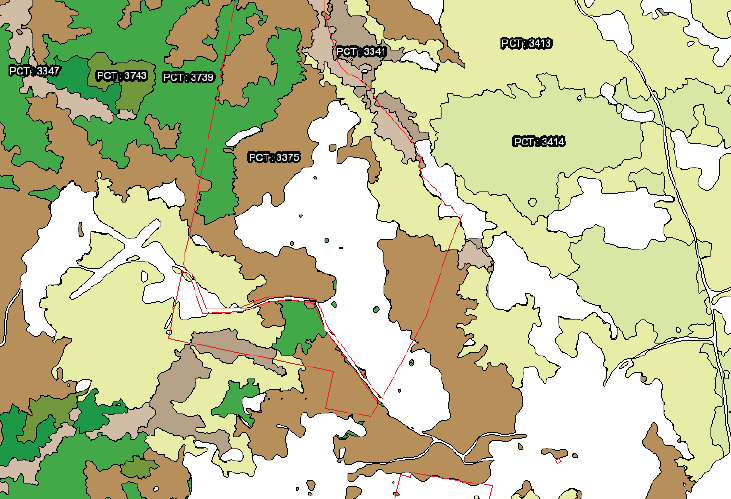
Most NSW farmers reading their Native Vegetation Regulatory (NVR) map look at the coloured zones and stop there. Category 1 unregulated, Category 2...
Read More
Don't Get Caught Out — Navigating the Complex World of Environmental Mapping and Regulation

3 min read

Don't Get Caught Out — Navigating the Complex World of Environmental Mapping and Regulation

A NSW landowner consults the relevant government department before clearing. Gets verbal confirmation that the activity is permitted. Goes ahead....

Read More