2 min read

Environmental Obligations for NSW Rural Property Buyers — What You Need to Know

Environmental Obligations for NSW Rural Property Buyers — What You Need to Know

Buying rural property in NSW means inheriting a regulatory environment that doesn't always introduce itself politely. The Biodiversity Conservation Act 2016 and the Local Land Services Act 2013 work together to govern what you can clear, what you must manage, and what your property's previous owners may have already committed it to — sometimes without flagging it in the contract.

If your prospective property is zoned R5, RU1, RU3, RU4, RU5, C3, or C4, the framework applies. Size doesn't exempt you, and "scattered native trees" doesn't either.

What to investigate before contract — three core risk areas

1. Native vegetation clearing restrictions

Three pre-purchase questions decide whether your development plan is feasible at all:

  • Is there regulated native vegetation that requires approval before clearing?
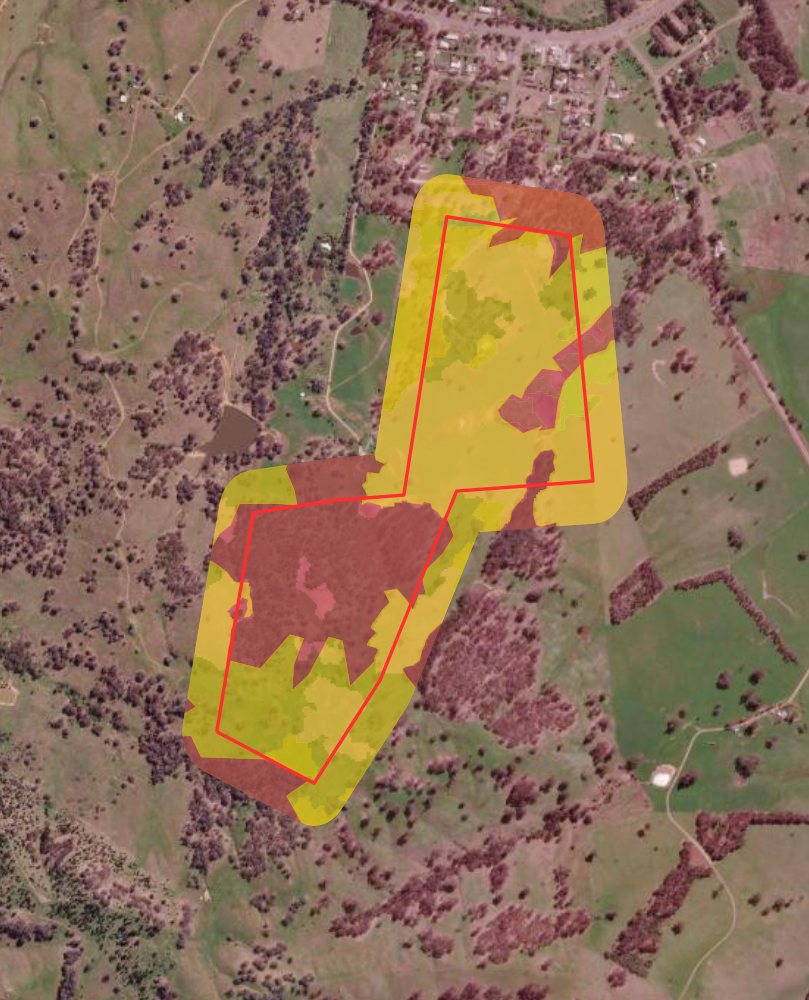
  • Is any of the property mapped under the Biodiversity Values Map (the purple-shaded layer that triggers offset obligations)?
  • Has the property already been signed up to a conservation agreement, biodiversity stewardship agreement, or offset arrangement by a previous owner?

The third question catches more buyers than the first two. Existing stewardship agreements run with the title and can constrain land use for decades.

2. Threatened species and ecological communities

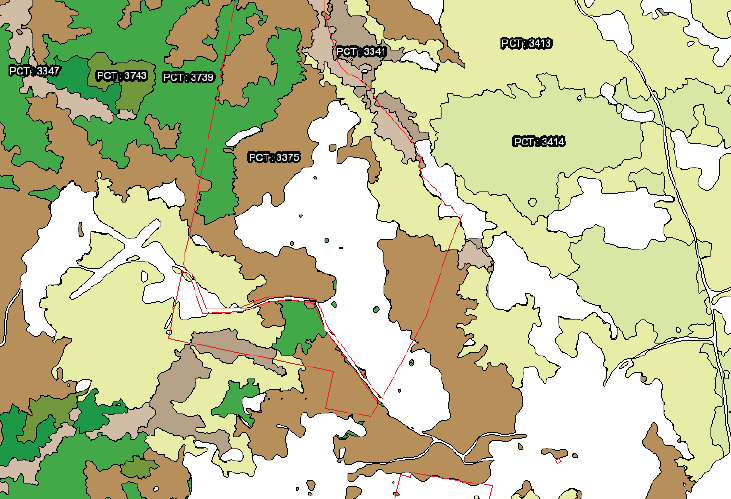
A property's listed threatened species or critically endangered ecological communities (CEECs) can quietly invalidate a development plan that looks fine on satellite imagery. CEECs trigger the strictest end of the Biodiversity Offsets Scheme — sometimes pricing a hobby development out of feasibility before the first survey is even commissioned.

3. Ongoing land management obligations

Rural property ownership in NSW comes with active duties, not just rights. New owners take on responsibility for:

  • Controlling declared weeds (priority weeds vary by Local Land Services region)
  • Managing feral animals
  • Preventing soil erosion
  • Maintaining riparian zones along waterways

These aren't theoretical: they're enforceable, they cost money to discharge, and they shape your annual operating budget in ways most pre-purchase financial modelling ignores.

Want this for your specific property?

A Property & Environmental Assessment runs your address through 140+ NSW datasets and gives you the full picture in 2 business days. 24-page report. Plain language. Designed to be read by a buyer, not an ecologist.

Order PEA — AU$1,499 →

How a Property & Environmental Assessment fits in

A pre-purchase Property & Environmental Assessment (PEA) is built specifically to answer the questions above before you sign. It checks the property against 140+ NSW datasets and tells you, in plain language:

  • Which clearing restrictions apply, and to what area
  • Whether threatened species or CEECs are mapped on or adjacent to the title
  • What management obligations come with the zoning and the vegetation present
  • How environmental regulation will likely shape your intended use — house, paddock, dam, subdivision, agritourism
  • Whether existing conservation/stewardship arrangements are recorded
  • Where biodiversity stewardship could become a revenue stream rather than just a constraint

The report is designed to be read by a buyer — not by an ecologist — and to be usable as a negotiating document if it turns up something that affects price.

When to commission the PEA

The most useful timing is after inspection, before offer. That gives you:

  • Specific facts to inform the price you're willing to pay
  • Documentation to use in negotiation if the property's marketing oversold its development potential
  • A defensible basis for walk-away decisions on properties that look fine until the data lines up

For properties under contract subject to a due-diligence clause, commissioning the PEA inside that window is the lowest-risk option: you have time to react, the seller has time to respond, and any issues surface while the contract is still conditional.

The bottom line

Environmental regulation is part of NSW rural property ownership. The properties most often disputed at council, most often subject to compliance action, and most often unsellable five years later are those whose environmental constraints were never investigated before purchase.

Investigate before you sign. The cost is a tiny fraction of the property price, and the protection is asymmetric — a clean report gives you confidence; a constrained one saves you from a transaction that would have hurt you regardless of how the inspection went.


Ready to investigate before you sign?

The Property & Environmental Assessment is MapCheck's full pre-purchase report for NSW rural buyers. 24 pages. 140+ datasets. Plain-language regulatory analysis. Delivered in 2 business days.

Order Property & Environmental Assessment — AU$1,499 →

Ready to check your property?

Order your MapCheck report

140+ NSW datasets · PDF in 1–2 days · No account required.

Order LCCA — AU$499 → Order PEA — AU$1,499 → Order Education — AU$2,499 →
Incl. GST · Stripe secure
Pre-Purchase Environmental Assessment for Hobby Farm Development

Pre-Purchase Environmental Assessment for Hobby Farm Development

Client James T., Consultant and Hobby Farmer Location Northern Tablelands, NSW Turnaround 2 business days Product Property & Environmental Assessment (PEA)

Read More
Maximizing Biodiversity Stewardship Value for Rural Landowners

Maximizing Biodiversity Stewardship Value for Rural Landowners

Client Multi-generational farming family, NSW Property 120+ hectares of high-value vegetation Counterparty Renewable infrastructure developer seeking...

Read More
Don't Get Caught Out — Navigating the Complex World of Environmental Mapping and Regulation

Don't Get Caught Out — Navigating the Complex World of Environmental Mapping and Regulation

A NSW landowner consults the relevant government department before clearing. Gets verbal confirmation that the activity is permitted. Goes ahead....

Read More
Native Vegetation Laws in NSW — What Property Owners Need to Know

4 min read

Native Vegetation Laws in NSW — What Property Owners Need to Know

Native vegetation in NSW sits under two pieces of legislation that work in tandem: the Biodiversity Conservation Act 2016 (BC Act) and the Local Land...

Read More
The Hidden Threat — What NSW Farmers Really Need to Know About NVR Mapping

3 min read

The Hidden Threat — What NSW Farmers Really Need to Know About NVR Mapping

Most NSW farmers reading their Native Vegetation Regulatory (NVR) map look at the coloured zones and stop there. Category 1 unregulated, Category 2...

Read More
How Biodiversity Risk Reports Help Navigate NSW SEPP Requirements for Land Development and Farming Operations

4 min read

How Biodiversity Risk Reports Help Navigate NSW SEPP Requirements for Land Development and Farming Operations

Understanding the complex web of NSW biodiversity regulations can be challenging for property owners, whether you're planning residential development...

Read More