3 min read

Maximizing Biodiversity Stewardship Value for Rural Landowners

Maximizing Biodiversity Stewardship Value for Rural Landowners
ClientMulti-generational farming family, NSW
Property120+ hectares of high-value vegetation
CounterpartyRenewable infrastructure developer seeking biodiversity offsets
ProductProperty & Environmental Assessment (PEA)

The challenge

A multi-generational NSW farming family was approached by a renewable infrastructure developer needing biodiversity offsets to satisfy regulatory obligations on their project. The developer proposed establishing a biodiversity stewardship arrangement on the family's property.

The opening position was structurally disadvantageous to the family:

  • A restrictive Non-Disclosure Agreement was demanded up-front
  • The preliminary valuation sat below market standards for comparable arrangements
  • The NDA limited the family's ability to seek independent counsel
  • Information advantage sat almost entirely with the developer
  • The developer pushed an aggressive timeline for commitment

The family understood the long-term potential of the offer but lacked the technical ability to:

  • Independently assess the property's ecological value
  • Determine fair compensation for a long-term conservation agreement
  • Understand the broader biodiversity offset marketplace
  • Compare the offer against regional benchmarks
  • Evaluate their negotiating position with confidence

The assessment

MapCheck delivered a Property & Environmental Assessment that produced a fully independent picture of the property's ecological value, regional competitive position, and reasonable market valuation.

1. Comprehensive biodiversity value assessment

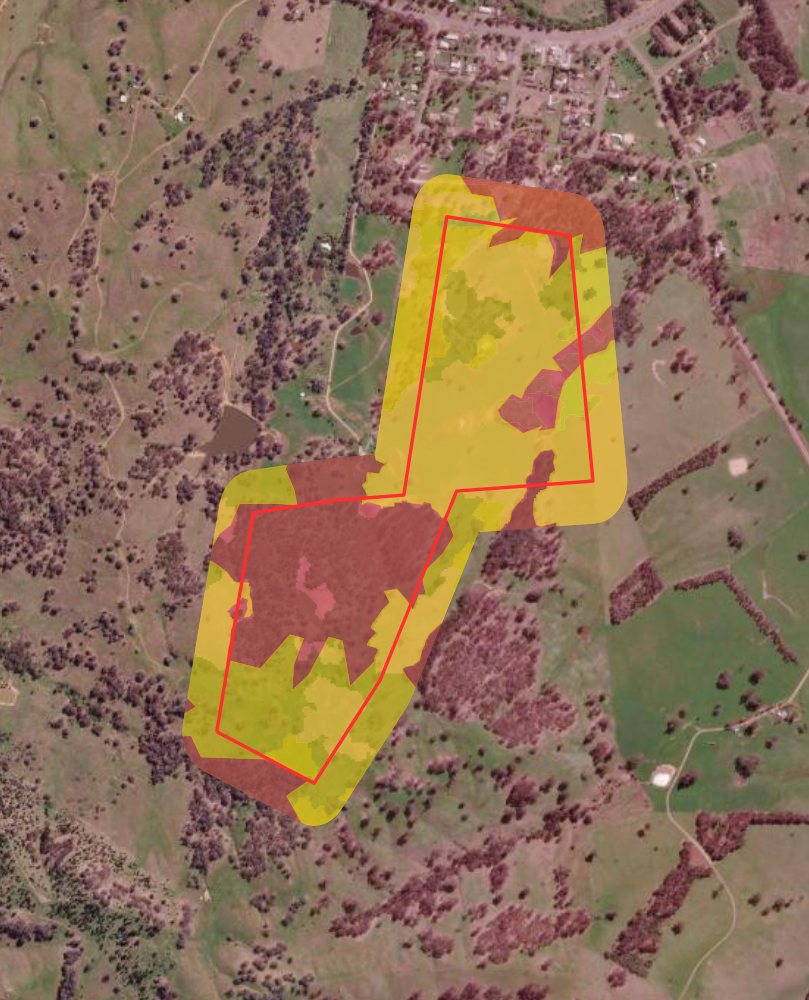
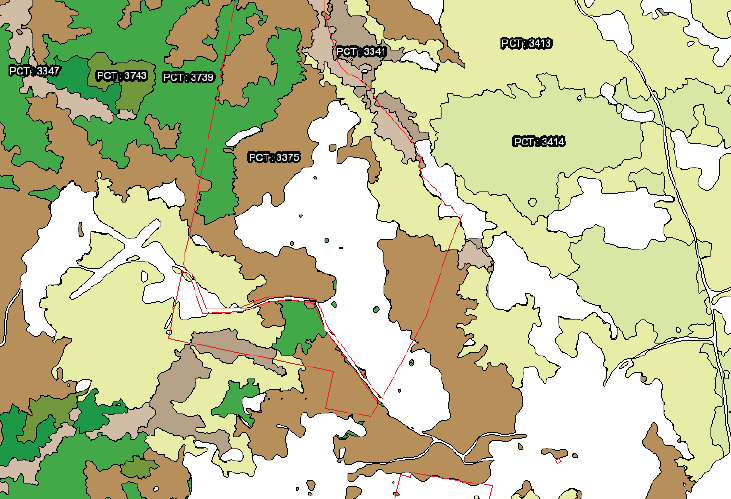
The property was analysed against the full set of relevant biodiversity datasets:

  • All Plant Community Types present, with conservation classifications
  • Threatened species habitat suitability mapping
  • Vegetation integrity scores by structure, composition, and function
  • Connectivity value within the broader landscape
  • Biodiversity credit generation potential

2. Regional competitive analysis

The property was benchmarked against comparable sites in the same bioregion:

  • Scarcity analysis of the specific PCTs within the bioregion
  • Quality comparison against similar vegetation communities
  • Accessibility and management feasibility versus alternative offset sites
  • Historical land management practices that had measurably enhanced ecological value
  • Specific landscape and species features making the property unusually valuable

3. Market-based valuation

Property-specific estimates from current credit market data:

  • Credit pricing benchmarks from recent transactions in the region
  • Regional demand projections for the specific credit types the property could generate
  • Long-term management cost calculations
  • Opportunity cost assessment for alternative uses
  • Future credit value projections based on visible development pipeline

4. Strategic negotiation framework

Practical guidance for the family:

  • Fair value ranges for stewardship agreements at this property's profile
  • Key negotiating leverage points
  • Alternative stewardship program options outside the developer's offer
  • NDA limitations and the alternatives available
  • Long-term financial implications of different agreement structures

Want this for your specific property?

A Property & Environmental Assessment runs your address through 140+ NSW datasets and gives you the full picture in 2 business days. 24-page report. Plain language. Designed to be read by a buyer, not an ecologist.

Order PEA — AU$1,499 →

What the PEA found

1. Superior biodiversity values

  • 120 hectares of critically endangered ecological community in excellent condition
  • Habitat for three threatened species that had not been recognised in the developer's initial assessment
  • Significant connectivity value between existing conservation areas
  • Historical sustainable grazing had maintained exceptional ground-layer diversity
  • Specific soil and landscape features supported rare plant assemblages

2. Strong regional competitive position

  • One of the largest remaining intact examples of this vegetation community in the bioregion
  • Less than 5% of similar vegetation in the region matched this condition
  • Largest and most cost-effective stewardship option in the region for offsetting parties
  • Family's long-term management expertise added measurable conservation value
  • Alternative offset sites would have required extensive (and expensive) restoration

3. Market position strength

  • Credit demand projections showed increasing scarcity for this ecosystem type
  • Recent transactions showed similar credits valued 62% higher than the initial offer
  • Property could generate approximately 2,800 ecosystem credits and 340 species credits
  • Multiple development projects in the pipeline needed similar offset credits
  • The family had viable alternative land-use options if no agreement was reached

The outcome

Armed with a comprehensive independent assessment, the family:

  1. Exited the restrictive Non-Disclosure Agreement
  2. Attracted competing interest from multiple developers
  3. Negotiated stewardship payment 78% higher than the developer's initial offer
  4. Retained grazing rights on portions of the property
  5. Secured ongoing management funding exceeding actual management costs
  6. Established a financial legacy supporting future generations

The renewable infrastructure developer secured the offsets it needed at market rates — with greater certainty and transparency than the original opening offer, and faster than negotiating with multiple competing landowners would have been.

The arrangement was a better outcome on both sides of the table.


What this case study illustrates

When a developer approaches a landowner about biodiversity stewardship, the developer arrives with a full picture of the property's ecological value, the regional offset market, and the credit pricing landscape. The landowner typically arrives with none of those.

A pre-negotiation Property & Environmental Assessment closes that gap. It provides the landowner with the same information the developer is working from — independently sourced, benchmarked, and translated into the dollar figures and decision points needed to negotiate from a position of clarity rather than concession.

The asymmetry of cost is significant. A PEA represents a tiny fraction of the value at stake in a multi-decade stewardship agreement. The 78% uplift in this case study isn't unusual when the property's actual ecological position is materially stronger than the opening valuation acknowledged.


Approached about a stewardship arrangement?

A Property & Environmental Assessment independently scopes your property's biodiversity value, regional competitive position, and market-rate stewardship valuation. 140+ NSW datasets. 24 pages. 2 business days.

Order Property & Environmental Assessment — AU$1,499 →

Ready to check your property?

Order your MapCheck report

140+ NSW datasets · PDF in 1–2 days · No account required.

Order LCCA — AU$499 → Order PEA — AU$1,499 → Order Education — AU$2,499 →
Incl. GST · Stripe secure
Pre-Purchase Environmental Assessment for Hobby Farm Development

Pre-Purchase Environmental Assessment for Hobby Farm Development

Client James T., Consultant and Hobby Farmer Location Northern Tablelands, NSW Turnaround 2 business days Product Property & Environmental Assessment (PEA)

Read More
Maximizing Biodiversity Stewardship Value for Rural Landowners

Maximizing Biodiversity Stewardship Value for Rural Landowners

Client Multi-generational farming family, NSW Property 120+ hectares of high-value vegetation Counterparty Renewable infrastructure developer seeking...

Read More
Don't Get Caught Out — Navigating the Complex World of Environmental Mapping and Regulation

Don't Get Caught Out — Navigating the Complex World of Environmental Mapping and Regulation

A NSW landowner consults the relevant government department before clearing. Gets verbal confirmation that the activity is permitted. Goes ahead....

Read More
How Biodiversity Risk Reports Help Navigate NSW SEPP Requirements for Land Development and Farming Operations

4 min read

How Biodiversity Risk Reports Help Navigate NSW SEPP Requirements for Land Development and Farming Operations

Understanding the complex web of NSW biodiversity regulations can be challenging for property owners, whether you're planning residential development...

Read More
Property Negotiation Tools — Using Environmental Data to Secure Better Deals

4 min read

Property Negotiation Tools — Using Environmental Data to Secure Better Deals

Real estate marketing emphasises strengths. That isn't deception — it's the job. The result is an information gap, particularly around environmental...

Read More
The Hidden Threat — What NSW Farmers Really Need to Know About NVR Mapping

3 min read

The Hidden Threat — What NSW Farmers Really Need to Know About NVR Mapping

Most NSW farmers reading their Native Vegetation Regulatory (NVR) map look at the coloured zones and stop there. Category 1 unregulated, Category 2...

Read More