4 min read

Property Negotiation Tools — Using Environmental Data to Secure Better Deals

Property Negotiation Tools — Using Environmental Data to Secure Better Deals

Real estate marketing emphasises strengths. That isn't deception — it's the job. The result is an information gap, particularly around environmental regulation and biodiversity constraints, that most buyers walk into without realising.

Independent environmental data closes that gap. And once it's closed, the gap turns into negotiating leverage.

Why environmental due diligence is also a price tool

A Property & Environmental Assessment (PEA) isn't just compliance insurance. It's a document that:

  1. Reveals development costs that affect the offer you should be making
  2. Identifies regulatory requirements that constrain how the property can actually be used
  3. Quantifies limits on clearing or development
  4. Surfaces issues the listing didn't disclose

Each of those becomes a factual basis for renegotiation — not a tactical wedge, but a documented finding.

Four real-world negotiation patterns

Pattern 1: The "ready to build" property that isn't

A buyer evaluates a 5-acre property listed as "ready for your new home with plenty of space to build." A biodiversity assessment reveals 70% of the property is endangered ecological community, severely restricting the actual buildable footprint.

Outcome: $175,000 price reduction, supported by a documented constraint map showing the difference between marketed area and usable area.

How to apply this:

  • Request the assessment before making your offer
  • Compare advertised buildable area against actual clearing-permitted area
  • Quantify the reduced usable area as a percentage of price
  • Present the report as objective evidence, not as a tactic

Pattern 2: The hidden offset cost

A developer evaluates a subdivision parcel described as having "no major constraints." Assessment identifies that the proposed clearing footprint triggers the Biodiversity Offsets Scheme — approximately $120,000 in offset credits plus $20,000 in ecologist reports needed for development approval.

Outcome: $195,000 below asking price, secured by factoring the compliance costs into a reframed feasibility analysis.

How to apply this:

  • Get the comprehensive report on properties under serious consideration
  • Use current credit market rates to translate offset requirements to dollar figures
  • Build those figures into your development cost estimate
  • Present them as facts that affect feasibility, not as objections

Pattern 3: The Biodiversity Values Map flag

A family buying a hobby farm discovers the property is on the Biodiversity Values Map (the purple-shaded layer). That status complicates approval pathways for clearing and development planned for the next 5 years.

Outcome: Buyers negotiated for the seller to initiate the Biodiversity Values Map review process before settlement — saving the buyers thousands in consultant fees and several months of uncertainty.

How to apply this:

  • Check Biodiversity Values Map status as part of every assessment
  • Determine the implications for your specific use plan
  • Make seller-actioned map review a sale condition
  • Adjust offer based on the timeline complexity

Pattern 4: The pre-existing approval that no longer fits

A property advertised as "approved for dual occupancy development" turns out to have undisclosed watercourse setback requirements and protected vegetation that affects the approved building envelope. The existing approval would need significant modification to be useable.

Outcome: $40,000 reduction plus an extended due diligence period to confirm the modified approval pathway.

How to apply this:

  • Cross-reference your environmental assessment against any existing approvals or marketing claims
  • Bring discrepancies to the council planning officer using the assessment as the discussion document
  • Frame discrepancies as factual rather than confrontational

Want this for your specific property?

A Property & Environmental Assessment runs your address through 140+ NSW datasets and gives you the full picture in 2 business days. 24-page report. Plain language. Designed to be read by a buyer, not an ecologist.

Order PEA — AU$1,499 →

How to use environmental reports inside an actual negotiation

1. Timing is everything

Commission and review the environmental report during the due diligence period — but before finalising your offer or making a strengthened offer. That gives you the information advantage while the offer is still moving.

2. Lead with facts, not accusations

Present constraints as findings, not attacks. "Our environmental assessment identified these specific constraints affecting property value" carries more weight than "the agent misled us." Sellers respond to documented findings; they push back on framing.

3. Quantify

Translate every constraint into a dollar figure where you can — reduced usable area, additional offset cost, extended approval timeline. Numbers anchor the conversation.

4. Offer adjustments, not just objections

"Given clearing restrictions, we're prepared to proceed at a price reflecting reduced development potential" lands better than a list of problems. Solutions move negotiations; criticism stalls them.

5. Be willing to walk

The strongest negotiating position is the one that doesn't need the property. If a seller refuses to acknowledge significant documented constraints, that's also information — it suggests other parts of the transaction may not be straightforward either.

Beyond price — other levers worth considering

A good environmental report opens up more than just price reduction:

  • Extended settlement — buy time to confirm development potential with authorities
  • Conditional clauses — attach contract conditions to specific approval outcomes
  • Seller-funded studies — negotiate for the seller to commission additional assessments that clarify what your report flagged
  • Inclusions — use findings as leverage to add inclusions that offset remediation cost

What's in a PEA

The Property & Environmental Assessment is built to be useable as a negotiating document. It includes:

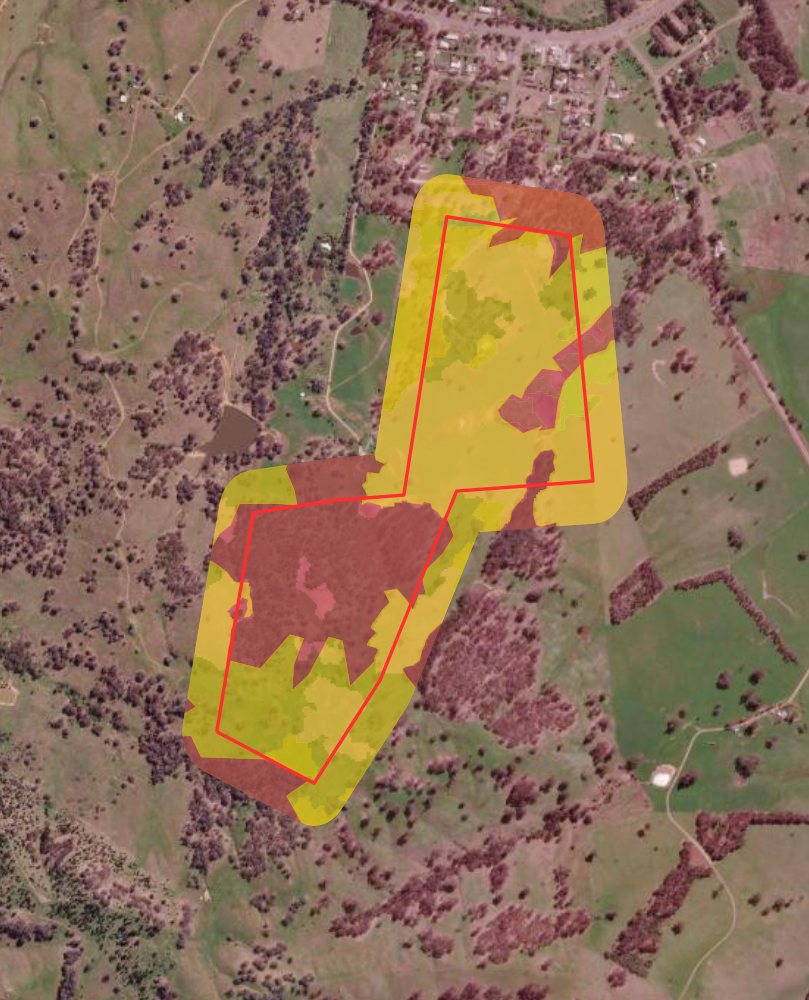
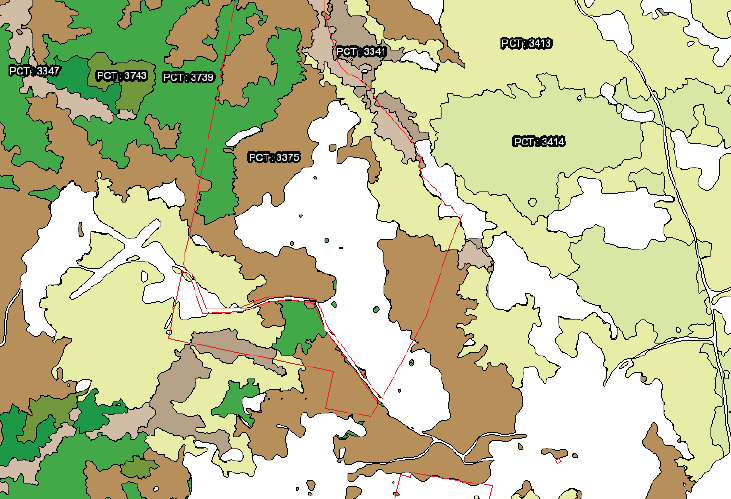
  1. Constraint maps showing where development is limited
  2. Regulatory analysis explaining the laws that apply and how they affect development
  3. Development potential assessment — what's actually possible, beyond what's marketed
  4. Compliance summary — approvals required, processes involved
  5. Cost implications — additional expenses likely under the relevant regulatory pathways

Plain language, 24 pages, designed to be read by a buyer and shared with their solicitor.

When to commission for maximum impact

For negotiation leverage:

  • Pre-inspection — for properties where environmental factors look likely material
  • Post-inspection, pre-offer — for properties under serious consideration
  • Conditional contract — when contract is subject to environmental satisfaction
  • Pre-auction — to determine your maximum bid based on actual development potential

The bottom line

Real estate agents are good at marketing. Environmental regulation isn't their specialty, and it isn't supposed to be. The information asymmetry that creates favours sellers — until objective environmental data enters the conversation.

A PEA levels the field. It provides factual evidence that counters optimistic marketing claims, specific details affecting actual property value, and documentation that supports a defensible negotiating position. In NSW in particular — where biodiversity and native vegetation regulation continues to tighten — environmental due diligence is one of the strongest tools a serious buyer has.


Negotiate from facts, not assumptions.

The Property & Environmental Assessment gives you 140+ datasets of negotiating evidence in a 24-page report. 2 business days. Order before your inspection or before your offer goes in.

Order Property & Environmental Assessment — AU$1,499 →

Ready to check your property?

Order your MapCheck report

140+ NSW datasets · PDF in 1–2 days · No account required.

Order LCCA — AU$499 → Order PEA — AU$1,499 → Order Education — AU$2,499 →
Incl. GST · Stripe secure
Pre-Purchase Environmental Assessment for Hobby Farm Development

Pre-Purchase Environmental Assessment for Hobby Farm Development

Client James T., Consultant and Hobby Farmer Location Northern Tablelands, NSW Turnaround 2 business days Product Property & Environmental Assessment (PEA)

Read More
Maximizing Biodiversity Stewardship Value for Rural Landowners

Maximizing Biodiversity Stewardship Value for Rural Landowners

Client Multi-generational farming family, NSW Property 120+ hectares of high-value vegetation Counterparty Renewable infrastructure developer seeking...

Read More
Don't Get Caught Out — Navigating the Complex World of Environmental Mapping and Regulation

Don't Get Caught Out — Navigating the Complex World of Environmental Mapping and Regulation

A NSW landowner consults the relevant government department before clearing. Gets verbal confirmation that the activity is permitted. Goes ahead....

Read More
The Hidden Threat — What NSW Farmers Really Need to Know About NVR Mapping

3 min read

The Hidden Threat — What NSW Farmers Really Need to Know About NVR Mapping

Most NSW farmers reading their Native Vegetation Regulatory (NVR) map look at the coloured zones and stop there. Category 1 unregulated, Category 2...

Read More
How Biodiversity Risk Reports Help Navigate NSW SEPP Requirements for Land Development and Farming Operations

4 min read

How Biodiversity Risk Reports Help Navigate NSW SEPP Requirements for Land Development and Farming Operations

Understanding the complex web of NSW biodiversity regulations can be challenging for property owners, whether you're planning residential development...

Read More
Biodiversity Credit Estimation: A Guide for NSW Landowners

5 min read

Biodiversity Credit Estimation: A Guide for NSW Landowners

Unlock the financial and environmental potential of your NSW property by understanding how biodiversity credits can transform conservation into...

Read More